
Last updated September 3, 2026
Garage Door Repair Maintenance Checklist for Philadelphia Homeowners
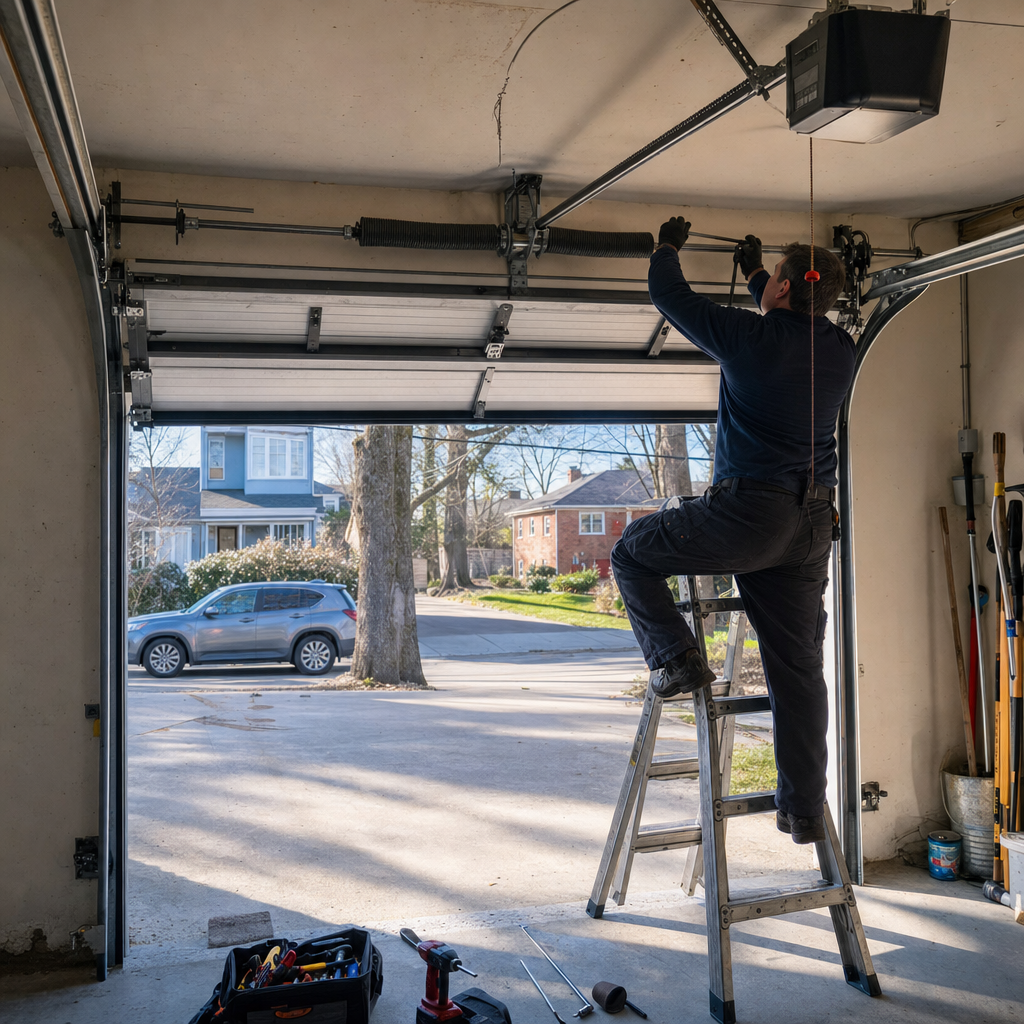
After more than a thousand service calls across Philadelphia, the same deferred maintenance items appear on nearly every emergency job: the five-minute checks homeowners skipped that turned into $400 repairs. In neighborhoods from Fishtown to West Philly, we’ve seen road salt migrate through alley gaps and destroy bottom brackets in a single winter, and we’ve watched summer humidity swell wooden door panels until they jam in their tracks. This isn’t a generic manufacturer’s checklist repackaged with a city name slapped on top. It’s the exact inspection sequence Jason Reed uses on service calls, refined across 11 years of Philadelphia’s specific climate, infrastructure, and failure patterns.
Quick Answer
Philadelphia homeowners should inspect their garage door monthly for balance, hardware tightness, and salt corrosion; lubricate rollers, hinges, and springs quarterly with silicone-based products; and test safety reverse systems every 30 days. Skip wax-based lubricants that gum up in summer humidity, and never adjust torsion springs yourself — the stored energy can cause serious injury. A 15-minute seasonal check prevents the majority of emergency calls we handle in Philadelphia.
Table of Contents
- Why Philadelphia Garages Fail Differently
- Monthly Visual Inspection
- The Balance Test You Can Do Safely
- Lubrication: What Matters, What to Skip
- Salt Corrosion Checklist: November Through March
- Safety Systems: Monthly Testing
- Seasonal Deep Inspection Schedule
- Common Mistakes to Avoid
- When to Call a Professional
- Frequently Asked Questions
Why Philadelphia Garages Fail Differently
Philadelphia’s garage doors face a specific set of stressors that suburban or southern climates simply don’t replicate. Understanding these local factors shapes every item on our checklist.
Road salt and brine migration. From November through March, Philadelphia’s streets get heavy treatment with magnesium chloride and rock salt. In rowhouse neighborhoods like South Philly and Kensington, alley garages sit directly adjacent to salted streets. Salt-laden slush gets kicked up by tires, tracked in on shoes, and blown through gaps in weatherstripping. We’ve replaced bottom brackets on 6-year-old doors that looked 20 years old inside — the salt crystallizes in roller stems and corrodes hinge pins from the bottom up. Garages on narrow streets like those in Garage Door Repair in Center City see this worst, with minimal setback from traffic.
Summer humidity and wood movement. Philadelphia’s July and August humidity regularly hits 80%+. Older garages in Germantown and Mount Airy often have original wood jambs and header casings. That moisture swells wood, shifts door alignment, and accelerates rot in bottom sections where splash-back hits. We’ve seen properly balanced doors start binding in August simply because the jamb expanded 1/8 inch.
Freeze-thaw cycling. Philadelphia averages 20-30 freeze-thaw cycles per winter. Concrete floors heave slightly, track mounting points shift, and doors that sealed fine in October gap in January. This is particularly true in pre-war garages with stone or brick foundations common in University City and Chestnut Hill.
Age of housing stock. Philadelphia’s median housing age exceeds 70 years. Many garage structures weren’t built for modern sectional doors — they’re retrofitted into carriage-house openings with masonry surrounds that corrode hardware faster than standard wood framing. The Fortress Garage Door Service Pennsylvania home page details how we approach these retrofit challenges specifically.
Monthly Visual Inspection
This 10-minute walkaround catches problems before they strand your car or compromise security. Do it with the door closed first, then open.
Door closed — exterior and interior:
- Check bottom seal condition. In Philadelphia, road salt and grit collect on the seal’s contact surface. Look for cracking, flattening, or gaps where light shows through. A failed seal lets salt, water, and rodents enter — we see this constantly in alley garages near commercial corridors.
- Inspect panels for damage. Steel doors: check for dents and rust spots, especially bottom sections. Wood doors: look for swelling, delamination, or rot at bottom edges. Fiberglass: check for UV brittleness on south-facing installations.
- Examine hinges and roller stems. Look for rust streaks, which indicate internal corrosion. Wiggle each roller — lateral play more than 1/4 inch means bearing wear.
- Check cable attachment points. The bottom fixture where lift cables attach takes enormous stress. Look for fraying, kinking, or rust bloom on cables. Never touch cables under tension.
Door open — track and hardware:
- Inspect horizontal track mounting. Lag screws into wood jambs loosen over time; masonry anchors in older Philadelphia brick can pull out. Look for pulled fasteners or gaps between track and jamb.
- Check spring condition (visual only). Look for gaps between coils in torsion springs, rust, or coil separation. Extension springs: check for stretched appearance or worn pulleys. Do not attempt to adjust or remove springs. The stored energy in a standard torsion spring can cause serious injury or death. If you see damage, stop using the door and call a professional.
- Test opener rail stability. The rail should not flex or bounce when the door moves. Loose header brackets are common in Philadelphia’s older garages where original framing has degraded.
The Balance Test You Can Do Safely
Door balance is the single most predictive indicator of spring health and opener longevity. An unbalanced door forces the opener to work harder and fails prematurely. Here’s how to test without tools or risk.
Step-by-step balance test:
- Close the door fully.
- Pull the emergency release cord — typically a red handle hanging from the opener trolley. This disengages the door from the opener.
- Lift the door manually to waist height (about 3 feet).
- Release it gently.
What the results mean:
- Door stays put: Properly balanced. The springs are doing their job.
- Door drifts up: Springs are over-wound or too strong. The opener is fighting against upward pressure when closing.
- Door drifts down: Springs are weakening. This is the most common result we see on service calls in Philadelphia, especially after 5-7 years of use. The opener strains on every lift cycle.
- Door won’t stay at any position: Significant spring failure. Stop using the door immediately.
If the door drifts in either direction, the springs need adjustment or replacement. This is not a DIY task — torsion springs store lethal energy. In our experience across 11 years and over 1,000 Philadelphia jobs, improper spring handling causes more serious injuries than any other garage door repair attempt.
Lubrication: What Matters, What to Skip
YouTube videos over-complicate this. Most homeowners apply too much product to the wrong points, creating grime traps that accelerate wear. Here’s what actually matters in Philadelphia’s climate.
Lubricate quarterly — these three points only:
- Hinge pivot points: Where each hinge section bends. Use a thin film, wipe excess.
- Roller bearings: The wheel portion, not the stem. Rollers with sealed bearings (nylon wheels on steel stems) need minimal lubrication — a single drop per bearing.
- Torsion spring coils: Light coating across the top surface reduces friction between coils. Do not touch the spring ends or winding cones.
Skip these common mistakes:
- Track lubrication: Rollers need clean, dry tracks. Lubricant in the track collects dust and hardens into abrasive paste. We see this constantly on Philadelphia service calls — homeowners followed bad advice and created a grinding compound.
- WD-40 as lubricant: It’s a solvent and water displacer, not a lubricant. It evaporates and leaves residue that attracts moisture — exactly wrong for Philadelphia’s humid summers.
- Grease on plastic components: Many modern rollers and hinges use nylon. Petroleum-based grease degrades plastic over time.
Product selection for Philadelphia:
Use silicone-based spray lubricant with a narrow straw applicator. Silicone doesn’t attract dust, resists washout from rain and snow melt, and maintains performance across Philadelphia’s temperature swings. Avoid wax-based “white lithium” products — they thicken in cold and gum up in humidity. We’ve cleaned out more than our share of gummed hinges in July when the wax melted and trapped grit.
For reference, we work on what you have — whether it’s a Wayne Dalton TorqueMaster system, a Craftsman chain-drive opener, or any of the other major brands. The lubrication principles remain consistent; the application points vary slightly by design.
Salt Corrosion Checklist: November Through March
This section addresses the Philadelphia-specific maintenance that generic checklists miss entirely. Road salt treatment here is aggressive, and alley garages bear the brunt.
Weekly during active salt season:
- Inspect bottom 12 inches of door. This is where salt spray concentrates. Look for white crystalline deposits on hardware — early corrosion indicator.
- Check weatherstripping contact. Salt crystals embed in the seal and abrade the door bottom. Wipe the seal with damp cloth to remove grit.
- Clear drainage paths. Philadelphia alley garages often have minimal grading. Standing water mixed with salt accelerates bottom fixture corrosion exponentially.
Monthly deep checks:
- Remove and inspect bottom rollers. If you’re comfortable with basic mechanical work: with the door fully open, the bottom rollers carry minimal load. Pop them from the track (standard rollers, not low-headroom or special configurations), wipe stems clean, check for pitting. Reinstall with light silicone film. If stems show significant pitting or the bearings grind, replace the rollers — they’re $8-15 each and prevent catastrophic failure.
- Examine lift cable bottom attachments. The cable drum and bottom fixture connection points corrode from splash-back. Look for rust streaks indicating water intrusion into the cable strands.
- Check opener safety sensors. Salt spray films the lenses. Clean with dry cloth — moisture can trigger false obstruction readings.
In neighborhoods like Northern Liberties and Port Richmond, where narrow streets put garage doors within feet of salted roadways, we’ve seen bottom brackets fail completely in 3-4 years instead of the typical 15-year lifespan. The owner is on the job at Fortress, and we’ve replaced dozens of these in March when the accumulated damage finally lets go.
Safety Systems: Monthly Testing
Federal law mandates automatic reverse since 1993, but the mechanism only protects if it works. Test monthly — it takes 60 seconds.
Mechanical safety test (force setting):
- With the door fully open, place a 2×4 board flat on the floor, centered under the door path.
- Close the door using the remote or wall button.
- When the door contacts the board, it must reverse within 2 seconds.
If the door stops on the board without reversing, or if it crushes the board, the force setting is excessive. This is a common issue we find on older Raynor and Amarr opener combinations in Philadelphia’s aging housing stock — the opener has been “turned up” to compensate for a binding door rather than fixing the underlying problem.
Photoelectric sensor test:
- Start the door closing.
- Sweep a broom handle through the sensor beam (the small LED units mounted 4-6 inches above floor level on each track).
- The door must reverse immediately.
Sensor alignment in Philadelphia garages: Older masonry walls shift with freeze-thaw cycles. We’ve found sensors knocked out of alignment by winter heaving in Center City rowhouse garages where the mounting surface is 100-year-old brick. Check that both sensor LEDs glow steady — flashing indicates misalignment or wire damage.
Important: If either test fails, discontinue automatic operation until repaired. A door that doesn’t reverse is a liability hazard and a safety risk to children and pets.
Seasonal Deep Inspection Schedule
Beyond monthly checks, schedule these deeper inspections seasonally — our Seasonal Garage Door Care for Philadelphia: Year-Round Homeowner’s Guide covers what to check and when. Mark your calendar — consistency matters more than perfection.
Spring (April):
- Full hardware torque check: tighten all bolts, nuts, and lag screws with appropriate drivers. Track brackets loosen over winter from vibration and thermal cycling.
- Inspect wood jambs for rot or insect damage — carpenter bees are active in Philadelphia by late April.
- Test battery backup on opener if equipped. Power outages spike in spring storms.
- Clean photo-eye lenses thoroughly after winter grime accumulation.
Summer (July):
- Check door panel expansion — wood doors especially. In humid Philadelphia summers, panels can swell 1/16 to 1/8 inch per section. If the door binds mid-travel, humidity is the likely cause, not mechanical failure.
- Inspect opener motor ventilation — dust and pollen clog cooling vents after spring bloom.
- Verify weatherstripping hasn’t compressed permanently from heat — replace if it no longer springs back.
Fall (October):
- Pre-winter hardware check — address any corrosion before salt season begins.
- Test manual release operation — lubricate if sticky. You may need it during a winter power outage.
- Inspect bottom seal for gaps that would admit melting snow.
- Check garage interior drainage — clear any debris before freeze-up.
Winter (January):
- Mid-season salt corrosion assessment — the heaviest treatment months.
- Test opener performance in cold — lubricant thickens; some openers strain if not properly maintained.
- Verify weatherstripping maintains seal despite door contraction in cold.
For homeowners considering Garage Door Installation in Center City or elsewhere in Philadelphia, we design seasonal maintenance requirements into our recommendations — some materials and configurations simply handle Philadelphia’s climate better with less intervention.
Common Mistakes to Avoid
- Ignoring the manual release. Philadelphia’s aging electrical infrastructure means outages are more frequent than in newer suburbs. Homeowners who never test the red emergency cord discover it seized when they actually need it. Test monthly, lubricate annually.
- Over-tightening hardware. Track brackets need firm contact, not maximum torque. Stripped lag bolts in Philadelphia’s often-soft old wood jambs are a service call we make regularly — the homeowner created the problem trying to “fix” a rattle.
- Using the wrong lubricant seasonally. That white lithium grease that worked fine in your cousin’s Arizona garage turns to gritty paste in Philadelphia humidity. We’ve cleaned out more failed lubrication jobs than we can count.
- Neglecting the bottom third. Salt corrosion concentrates low. Homeowners inspect eye-level hardware meticulously while the bottom brackets dissolve unseen. In South Philly alleys, this is the #1 preventable failure we encounter.
- DIY spring adjustment attempts. We cannot emphasize this enough: torsion springs are not a maintenance item for homeowners. The winding bars must be inserted precisely, the technique requires specific training, and the energy release from a slipping bar causes traumatic injuries. We’ve seen the aftermath. Call a professional.
- Assuming silence means health. A door that runs quietly but drifts down or strains the opener is failing silently. The balance test reveals problems that noise alone won’t.
- Paying for “maintenance services” you can do yourself. Some companies sell annual “tune-ups” that consist entirely of lubrication and visual inspection — the items on this checklist. The legitimate value of professional service is in spring adjustment, track realignment, and component replacement, not in applying spray lubricant you can buy for $12.
When to Call a Professional
Some maintenance boundaries are clear: never adjust springs, never touch cables under tension, never modify safety systems. But certain conditions warrant professional assessment even if they seem manageable — see How to Hire a Garage Door Contractor in Philadelphia: A Step-by-Step Guide to choose qualified help.
Call for service if: the door has come out of its tracks; panels are visibly cracked or separating; the opener motor hums but the door doesn’t move; you smell burning from the opener unit; the door reverses erratically without obstruction; or you’ve had two or more component failures in 12 months — this indicates systemic issues.
Your garage door is your home’s first line of defense. When it fails, it’s a security risk, not merely an inconvenience. Fast response when it matters most is why we offer our Garage Door Repair services for urgent situations — a stuck door at 10 PM, a spring that snapped with your car trapped inside, a door that won’t secure after a break-in attempt.
Fortress Garage Door Service Pennsylvania offers free estimates in Philadelphia — call (855) 938-5455. Jason Reed handles the assessment personally, diagnoses honestly, and repairs what can be repaired rather than pushing unnecessary replacement. Over 1,000 neighbors have trusted us with their garage doors, and the accountability of having the owner on the job means the work gets done right.
Frequently Asked Questions
Monthly visual inspections, quarterly lubrication, and seasonal deep checks are the minimum for Philadelphia’s climate. For step-by-step help, explore more guides & resources on our site. The salt season from November through March demands weekly attention to bottom hardware in alley garages near salted streets. Call (855) 938-5455 for an exact assessment of your specific setup — estimates are free.
Homeowners can safely lubricate hinges, roller bearings, and spring coils using silicone-based spray. The task takes 10 minutes quarterly. However, if you discover corrosion, binding, or component wear during lubrication, that’s the point to call a professional rather than forcing operation. We work on what you have — no upsell pressure to replace what a repair will fix.
Philadelphia’s summer humidity swells wood jambs and door panels, particularly in pre-war garages common in Germantown, Mount Airy, and West Philly. The expansion is often 1/8 inch or more — enough to bind a properly adjusted door. Check for wood-to-wood contact, ensure the door isn’t over-painted creating thickness buildup, and verify track alignment hasn’t shifted. Persistent summer binding may require jamb adjustment or door material change.
Routine professional service typically runs $150–$250 for a standard residential door, including spring tension adjustment, hardware torque verification, track alignment check, safety system testing, and component wear assessment. This differs from basic lubrication services — the value is in mechanical adjustment and early failure detection, not applying spray lubricant. Call (855) 938-5455 for a free estimate on your specific door and opener combination.
Yes — the manual balance test described in this guide involves no tools and no contact with springs under load. Pull the emergency release, lift to waist height, and observe. If the door drifts, stop and call a professional for spring service. Never attempt to adjust springs yourself — the stored energy can cause serious injury. We’ve handled the aftermath of DIY spring attempts, and it’s not worth the risk.
The high-value tasks: monthly balance tests (catch spring degradation early), quarterly lubrication of moving parts (reduce friction wear), seasonal hardware torque checks (prevent component failure from vibration), and vigilant salt corrosion management in Philadelphia winters (prevents catastrophic bottom-section failure). Low-value tasks to skip: track lubrication (creates grime traps), annual full-panel painting (cosmetic unless wood protection), and paid “tune-up” services that only spray lubricant and look around. Focus your effort on mechanical health, not appearances.
The Bottom Line
Philadelphia’s specific climate and infrastructure demand a maintenance approach that accounts for road salt corrosion, humidity-driven wood movement, and aging garage structures. The checklist in this guide — monthly visual inspection, safe balance testing, targeted lubrication, seasonal salt management, and safety system verification — prevents the majority of emergency calls we handle. The 15 minutes you invest monthly saves the $400 repair that follows neglected maintenance. For Garage Door Opener in Center City or anywhere in Philadelphia, we bring 11 years of local expertise to every job. Your garage door is your home’s first line of defense — maintain it accordingly.
Written by Jason Reed, Owner & Lead Technician at Fortress Garage Door Service Pennsylvania, serving Philadelphia since 2015.