
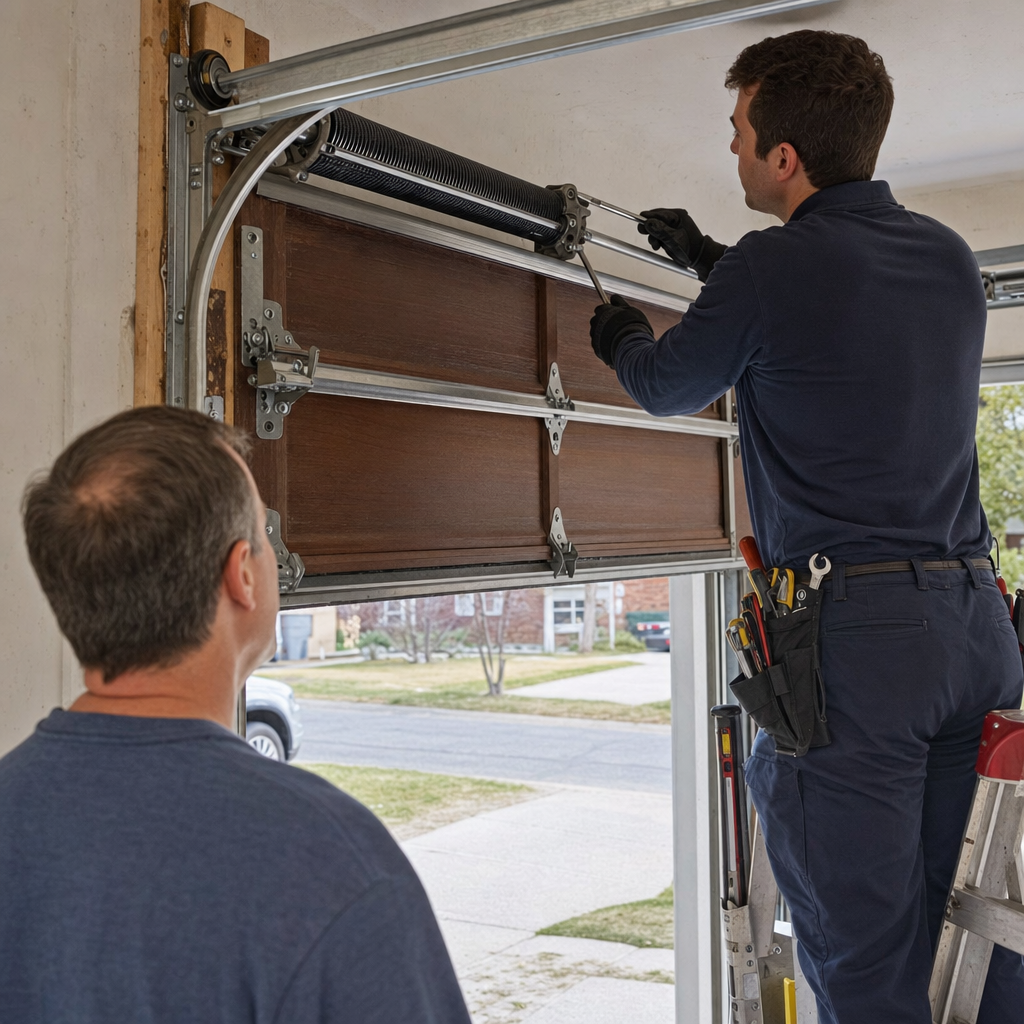
Garage Door Spring Replacement Cost in Pennsylvania, PA: $180–$340 for Standard Repairs, Up to $600 for Heavy-Duty Retrofits
Most homeowners in Pennsylvania pay between $180 and $340 for a standard garage door spring replacement, though jobs on heavier insulated doors or mismatched systems can run toward $600. We’re Fortress Garage Door Service Pennsylvania — call (855) 938-5455 for a free, exact quote on Garage Door Repair services from the technician who’ll actually do the work. Jason Reed, our owner and lead technician, has replaced springs across this market for 11 years, and he’ll tell you straight: the real cost variable isn’t the spring itself. It’s whether whoever’s on your job understands what your door was originally engineered for.
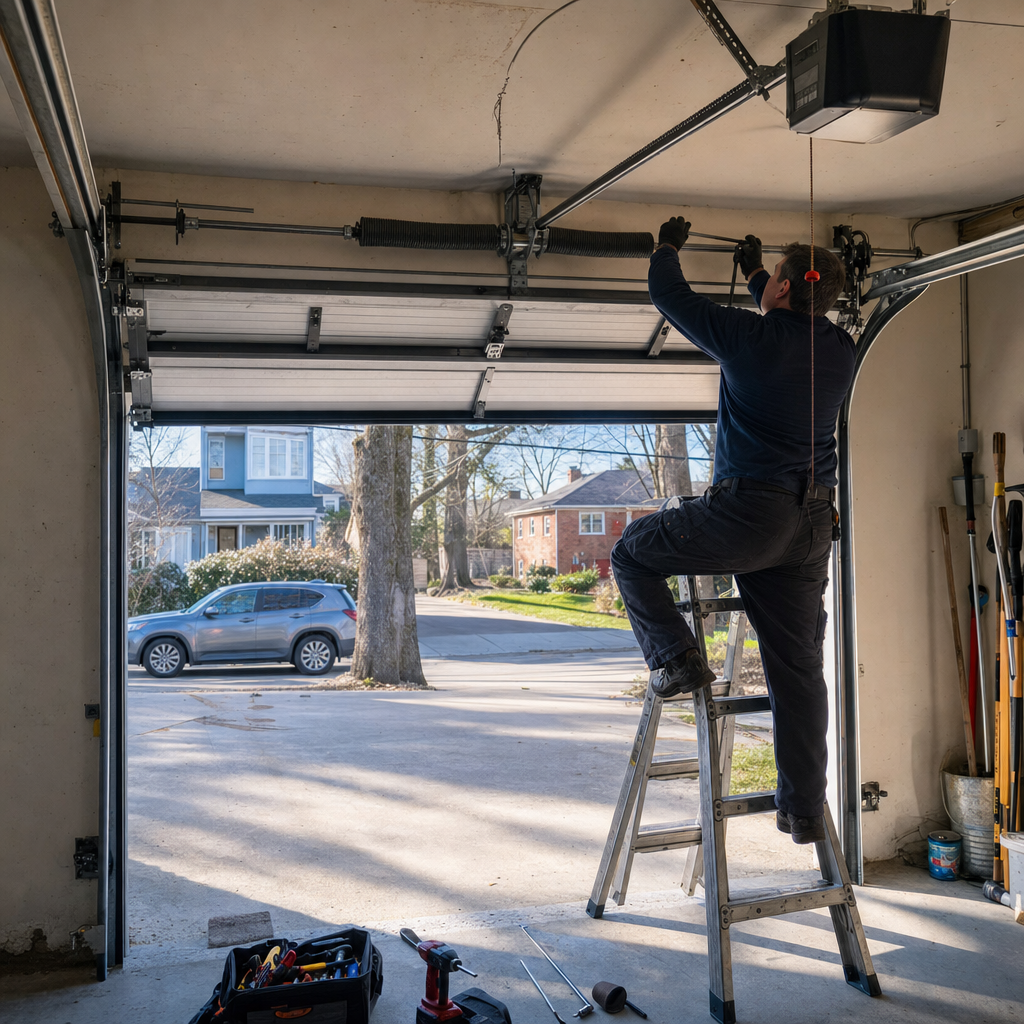
Here’s what happens half the time we roll up to a Pennsylvania garage. The homeowner’s got a broken spring on a door that was swapped in sometime around 2012 — one of those insulated steel models that weighs 40 percent more than the original wood-panel door. The last installer never recalculated the spring cycle count or torque rating. So that “new” spring has been overworked from day one, living on borrowed time, and now it’s failed early and maybe warped the track, which may require Garage Door Off Track Repair in Pennsylvania, PA, or stressed the opener. That’s the conversation most price pages skip. We’re not skipping it.
Why Pennsylvania’s Housing Stock Hides Extra Spring Costs
Pennsylvania’s older neighborhoods — think the row homes and detached garages of Lansdowne, the post-war splits in Drexel Hill, the converted carriage houses still standing in parts of Chester County — weren’t built for modern insulated doors. Original doors were lightweight, often uninsulated wood or thin steel. When homeowners upgraded to energy-efficient models to cut heating bills, plenty of installers slapped on the new door without resizing the spring system.
The math catches up. A standard 10,000-cycle spring on a door that’s 40 pounds overweight might last 7,000 cycles instead of 10,000. At two open/close cycles per day, that’s the difference between 13 years and 9 years — and Pennsylvania’s freeze-thaw cycles, especially on uninsulated garages, can shorten that another 20 to 30 percent. Rust forms in the coils. Metal fatigue accelerates. We’ve pulled springs out of garages near Ridley Park that looked like they failed in year five because they were never specced right in the first place, which is why customers ask us Why Does my Garage Door Reverse? (Pennsylvania, PA) when their system starts showing early warning signs.
Jason Reed grew up in Lansdowne, just outside Philadelphia, where he spent weekends helping his father maintain rental properties and developed an early respect for things that are built to last. He trained in building and construction technology at Delaware County Community College before gravitating toward mechanical systems and eventually specializing in garage doors — a trade that rewards patience and precision in equal measure. When he’s diagnosing a spring job in Pennsylvania, he’s not just counting coils. He’s checking what door weight the original builder assumed, what got installed later, and whether the current setup can actually handle what it’s being asked to do.
Spring Type and Door Weight: The Real Price Breakdown
Not all springs cost the same to replace, and not all should. Here’s how the numbers actually break down for Pennsylvania homeowners:
| Service | Price Range |
|---|---|
| Standard torsion spring replacement (single, light/medium door) | $180–$260 |
| Heavy-duty torsion spring (insulated door, high cycle) | $260–$340 |
| Dual spring system replacement (both springs) | $320–$480 |
| Extension spring conversion or retrofit labor | $150–$280 |
| Full system recalculation + heavy-duty springs for mismatched door | $400–$600 |
Torsion springs sit above the door, wound tight with stored energy. They’re the standard on most modern installations and the safer of the two systems when properly maintained. Extension springs run parallel to the horizontal tracks, stretching and contracting to lift the door. We see more extension springs still in service in Pennsylvania’s older housing stock than in newer construction, and they’re more prone to sudden, uncontrolled failure when they break.
The weight class matters enormously. A standard non-insulated steel door might weigh 80–100 pounds. An insulated double-car door with steel backing can hit 180–200 pounds. That difference demands a higher-torque spring, more expensive material, and more precise installation. We don’t guess at this. We weigh the door and check the manufacturer’s specs — something Jason does on every job because he’s the one holding the tools, not dispatching a crew from a call center.
Here’s where we differ from the franchise model: when we quote you, you’re talking to the person who’ll wind that spring. No dispatch fee layered on top of overhead. No technician showing up who’s seeing your door for the first time. The quote you get is from the person doing the work.
The 10,000-Cycle vs. 25,000-Cycle Decision Most Pages Don’t Explain
Spring lifespan gets sold in cycles. A 10,000-cycle spring, at two cycles per day, theoretically lasts about 13 years. A 25,000-cycle spring stretches past 34 years on paper. In Pennsylvania’s climate, we adjust those numbers down.
Why? Garage interiors in uninsulated or poorly sealed structures swing through temperature extremes — below freezing January mornings, humid July afternoons. Metal expands, contracts, and develops micro-fractures. Rust sets in where condensation collects. We’ve replaced 10,000-cycle springs that failed in year eight because the garage was drafty and the homeowner salted the driveway every winter, accelerating corrosion on the hardware.
The upgrade to a 25,000-cycle spring typically adds $80–$140 to the job. For homeowners planning to stay put, that’s usually worth it. For those selling within five years, maybe not. Jason walks through both options with actual numbers — no default upsell. Over 1,000 neighbors have trusted us with this call, and that trust comes from showing the math, not hiding it.
The Hidden Cost Trap: Replacing One Spring on a Two-Spring System
Some companies will quote you a single spring replacement on a dual-spring door to win the job. It’s cheaper today. It’s expensive tomorrow.
Here’s why: torsion springs on a dual-spring system share the load. When one breaks, the other’s been doing uneven work and is fatigued. Replace just the broken one, and you’re likely calling again in 12–24 months for the second — paying another service call fee, another labor charge, another afternoon waiting around. We’ve seen this exact scenario in Pennsylvania homes where a competitor saved the homeowner $80 upfront and cost them $300 a year later.
Our policy: we show both options. Single spring, full replacement, and the real total cost of each path over five years. Then you decide. If it’s not built to hold, it’s not built.
Why Opener Brand Matters for Spring Selection
This is a detail most spring pages miss entirely. Your opener has a torque rating — how much force it’s designed to apply. The wrong spring can push that opener past its limits, burning out the motor or stripping the drive gear.
LiftMaster and Chamberlain openers, which we work on constantly in Pennsylvania, have specific torque envelopes. A spring that’s too heavy for the door weight makes the opener work harder on every cycle. A spring that’s too light forces the opener to compensate with extra force. Either way, something fails prematurely. Jason cross-checks opener specs against spring selection on every job — part of why we’re trained on eight major brands including Craftsman and Raynor, and why we don’t push replacement when your opener can be saved with the right spring match.
We work on what you have. That brand-agnostic approach means no pressure to swap a functioning LiftMaster for a different model just because that’s what our supplier stocks.
When Spring Replacement Becomes a Safety Issue
Garage door springs hold enormous tension — enough to cause serious injury or worse if handled improperly. A winding bar slips, a cable snaps, a spring releases uncontrolled: these aren’t hypothetical risks. We’ve been called to Pennsylvania homes where a DIY attempt left the door jammed crooked in the tracks, the opener stripped, and the homeowner lucky to walk away — often after a Garage Door Wont Close in Pennsylvania, PA situation turned dangerous.
If your spring is broken, the door is dead weight. Don’t try to force it open or closed. Don’t disconnect the opener and muscle it manually. Call a trained professional who has the winding bars, the knowledge, and the liability awareness to handle high-tension components safely. That’s not cautionary fluff — it’s the difference between a $250 repair and an emergency room visit.
What Our Pennsylvania Spring Replacement Includes
- Full door weight assessment and original spec verification
- Spring cycle count and torque rating matched to your actual door
- Opener compatibility check (LiftMaster, Chamberlain, Genie, Craftsman, or Raynor)
- Hardware inspection: cables, rollers, bearings, and track alignment
- Lubrication of moving components with climate-appropriate compound
- Balance and safety reverse testing before we leave
- Upfront pricing with no dispatch fee or hidden add-ons
Every spring we install gets this full protocol because Jason’s the one standing behind it. He’s the guy neighbors call when another company has already been out twice and the door still isn’t right. Over 11 years running Fortress, that reputation for Best Garage Door Repair in Pennsylvania, PA with honest diagnostics and no-upsell repairs has been built one job at a time.
FAQs
Most Pennsylvania homeowners pay between $180 and $340 for a standard garage door spring replacement, with heavier insulated doors or mismatched systems running up to $600. The exact price depends on your door’s weight, whether you need one spring or two, and whether the original spring was properly specced for your door. Call (855) 938-5455 for a free estimate — we’ll weigh your door and give you the real number, not a guess.
Spring repair isn’t really a thing — once a spring breaks, it needs full replacement. The real cost decision is whether to replace one spring or both on a dual-spring system, and whether to upgrade to a higher cycle count. Replacing just one spring saves $80–$140 today but typically means a second service call within two years. We show both options with five-year totals so you can decide with full information.
A 10,000-cycle spring lasts about 13 years at two cycles per day in ideal conditions, but Pennsylvania’s freeze-thaw cycles and humidity can shorten that by 20–30 percent on uninsulated garages. Salt corrosion from winter driveway treatments accelerates rust. Upgrading to a 25,000-cycle spring adds $80–$140 upfront but often pays for itself in longevity, especially if you’re staying in the home long-term.
We offer emergency garage door service for situations where a broken spring has left your home unsecured or your vehicle trapped. Fast response when it matters most is part of what we do — a stuck door isn’t just an inconvenience, it’s a security risk. Call (855) 938-5455 and we’ll get you scheduled, often same-day for urgent situations in the Pennsylvania area.
Get Your Exact Spring Replacement Quote in Pennsylvania
Your garage door is your home’s first line of defense, and a broken spring leaves it wide open — literally. Don’t settle for a phone estimate from someone who’s never seen your door. Jason Reed, Owner and Lead Technician at Fortress Garage Door Service Pennsylvania, will come to your Pennsylvania home, weigh your door, check your opener specs, and give you an exact quote with no dispatch fee and no pressure. Over 1,000 neighbors have trusted us to get it right the first time. Call (855) 938-5455 now for your free estimate.
Written by Jason Reed, Owner & Lead Technician at Fortress Garage Door Service Pennsylvania, serving Pennsylvania, PA.
What Our Customers Say
"Opener works, remotes are programmed, no complaints on the work. Took three days to get on the schedule though, so if you've got a car trapped inside, say so when you call."
— Javier Flores"Track was bent and two of the rollers were shot. He straightened what he could, swapped the rollers for nylon ones, lubricated everything, and had it done in about an hour."
— Rachel Miller"Both cables had come off the drum and the door was hanging crooked. I'd watched a video and was about ten minutes from trying it myself, which the tech told me would have been a genuinely bad idea. Glad I called."
— Katie Ackerman