
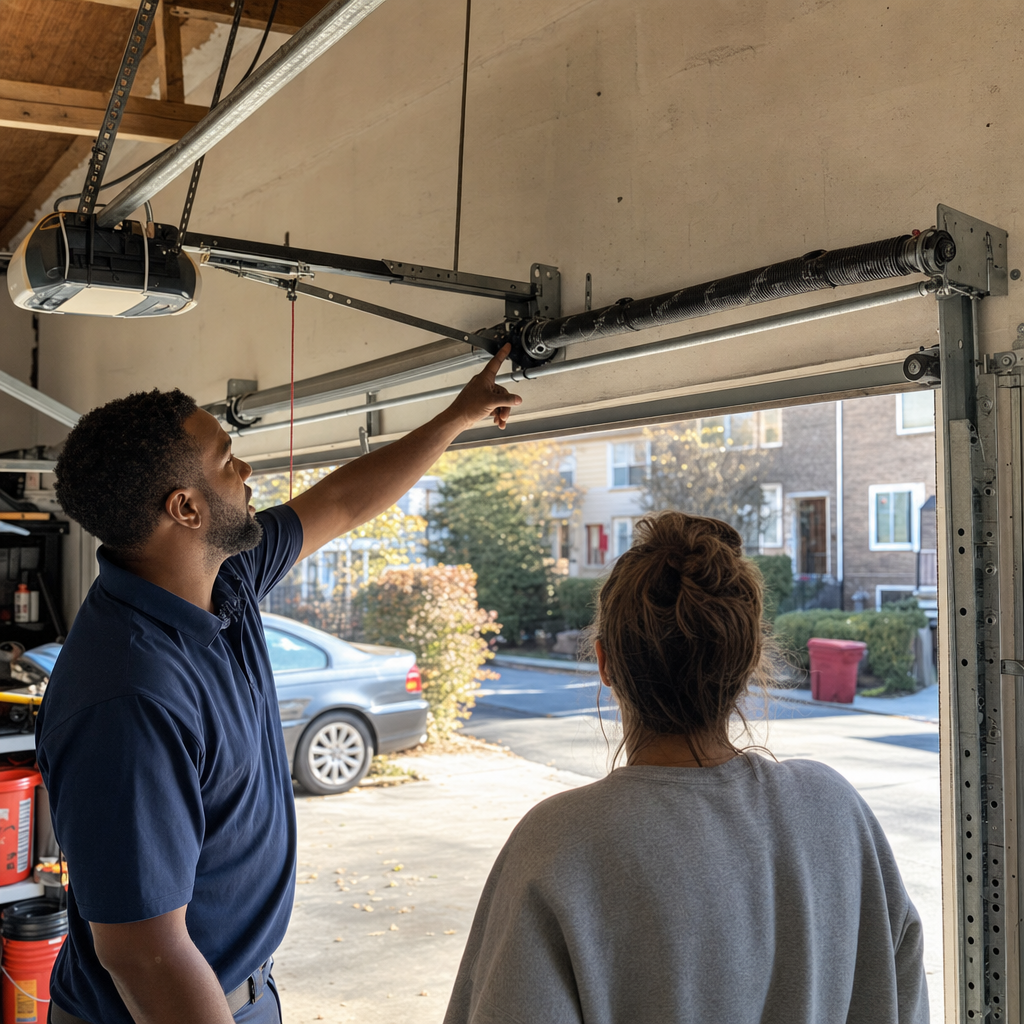
Why Does My Garage Door Reverse? The Three-Cause Diagnostic for Pennsylvania Homeowners
Your garage door reverses because something told it to — either it hit real resistance, its safety sensors detected an interruption, or its limit settings think the floor is higher than it actually is. In Pennsylvania’s variable climate, we’ve seen all three causes spike during seasonal temperature swings, especially when January cold snaps contract metal components and add enough friction to trick a properly calibrated opener. Here’s how to identify which of the three is your culprit in about five minutes, and when the fix is simple versus when you’ll want a professional set of eyes on it.
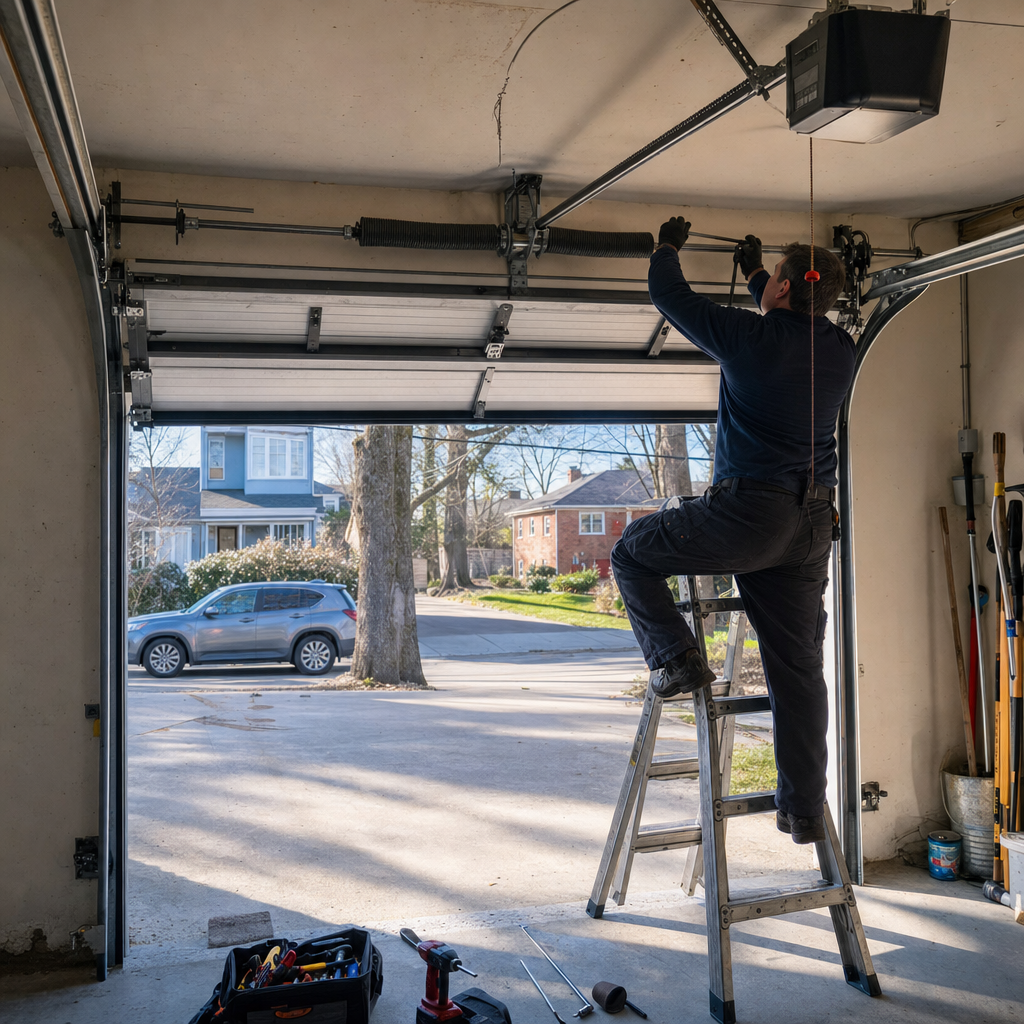
If your door is stuck open or reversing unpredictably right now, that’s a security gap for your home. Fortress Garage Door Service Pennsylvania responds to emergency garage door service calls across Pennsylvania when a door won’t secure properly — reach us at (855) 938-5455.
The Three-Cause Diagnostic Tree: Finding Your Reversal Trigger
We’ve spent 11 years tracking down why garage doors reverse on Pennsylvania homes, from rowhouses in Lansdowne where Jason Reed grew up helping his father maintain rental properties, to newer subdivisions in Chester County with 16-foot double doors. Every reversal traces back to one of three systems. Run these checks in order before you adjust anything.
Cause 1: The Safety Sensor Beam Is Broken or Misaligned
Start here because it’s the most common cause and the easiest to spot. Those two small boxes near the floor on either side of your door track? They’re shooting an invisible beam across the opening. If anything breaks that beam — a leaf, a shovel, a sun glare angle in late afternoon — the door reverses within two seconds or refuses to close.
The LED color key most Pennsylvania homeowners need:
- Amber or yellow LED (sending sensor): Should stay solid. This side transmits the beam.
- Green LED (receiving sensor): Solid green means aligned and communicating. Blinking green means the beam is interrupted — check for obstructions, spider webs, or misalignment. No light at all means the sensor has lost power or failed.
We’ve worked on enough LiftMaster, Chamberlain, Genie, and Craftsman openers across Pennsylvania to know the diagnostic sequence varies slightly by brand. On some Genie models, a blinking red LED replaces the green logic entirely. On certain LiftMaster units installed in the 2015–2019 window common in Bucks County new construction, the sending sensor LED actually pulses when misaligned rather than going dark — a detail that sends a lot of homeowners down the wrong troubleshooting path. Jason’s cross-brand certification on all eight major manufacturers means we don’t guess at the LED language your specific opener speaks.
Quick test: Hold down the wall button (not the remote). If the door closes fully while you’re pressing it, the sensors are almost certainly your issue — that manual override bypasses the photo-eye circuit.
Cause 2: The Down-Force Setting Is Too Sensitive
Your opener has a built-in force sensor that measures how hard the motor works to pull or push the door. If the down-force setting is calibrated too delicately, normal rolling resistance — slightly dry rollers, a track with accumulated grime, or that Pennsylvania winter contraction we’ll get to — reads as an obstruction. The door reverses because the opener thinks it hit something.
The DIY check: With the door fully open, pull the red emergency release cord to disconnect the opener. Manually lift and lower the door. It should move smoothly through its full travel with consistent effort. If you feel sticking points, rough spots, or places where the door wants to drift, you’ve got mechanical resistance that the force sensor is correctly detecting — and if the track itself is visibly bent or the rollers have jumped the rail, that’s when you need Garage Door Off Track Repair in Pennsylvania, PA.
Critical safety note: We see this mistake too often. Homeowners crank the down-force setting higher to “stop the reversing.” That defeats a safety system designed to prevent entrapment and property damage. A garage door can weigh 150–400 pounds depending on material and size. The force setting exists so the door reverses before it crushes something — or someone — rather than powering through. If your door reverses at normal force levels, the fix is reducing the mechanical resistance or recalibrating properly, not overriding the safety threshold. We’ve responded to emergency garage door service calls in Pennsylvania where a DIY force adjustment led to a door that wouldn’t reverse on actual contact — that’s a liability and an injury waiting to happen.
Cause 3: The Close-Limit Setting Thinks the Floor Is Further Away
The limit switches tell your opener how far to travel before it’s fully closed. When the close-limit setting is too short, the door reaches the physical floor before the opener thinks it should. The motor keeps running, senses unexpected resistance, and reverses — or the logic board interprets the stall as an obstruction trigger.
What this looks like: The door touches down, then immediately bounces back up a few inches, or reverses just as the bottom seal compresses against the concrete. The door isn’t hitting anything; it’s simply arriving “early” in the opener’s programmed travel.
What wears limits out of calibration: Cable stretch over years, spring tension changes, or someone previously adjusting the travel without marking original positions. In Pennsylvania’s older housing stock — particularly pre-1980s garages in Delaware County and Montgomery County where Jason did much of his early work — settling foundations and heaved concrete from freeze-thaw cycles physically change where “closed” is relative to where the opener was originally set.
Pennsylvania’s Winter Factor: When Cold Itself Causes Reversal
Here’s something the generic troubleshooting guides never mention because they weren’t written for our climate. Extreme cold causes steel rollers, hinges, and torsion springs to contract. Grease that flowed smoothly at 50°F becomes viscous at 15°F. The cumulative effect is rolling resistance that exceeds your opener’s calibrated down-force threshold — on a door that worked perfectly in October.
We’ve seen this pattern repeat across Pennsylvania every January. A homeowner in Collegeville calls because their door reverses at 6 a.m. when temperatures bottom out, then works fine by 10 a.m. as the garage warms. The door isn’t broken; the physics changed.
The lubrication fix we recommend before a service call: Apply a silicone-based garage door lubricant (not WD-40, which attracts dust) to rollers, hinges, and the torsion spring. Cycle the door manually several times to distribute it. If the reversal stops, you’ve solved a maintenance issue, not a mechanical failure. If it persists after lubrication and temperature normalization, then we’re looking at a calibration or component problem.
This is where our 11 years of Pennsylvania-specific experience matters. A franchise technician rotating through from out of state might replace a perfectly good opener without recognizing the seasonal pattern. We’ve learned to ask when the problem started and whether it correlates with temperature drops — because the right fix for a winter-friction reversal is different from the right fix for a failed logic board.
When Reversal Means Professional Diagnosis
Run through the three checks above. If your sensors show solid, aligned LEDs with no obstructions, your manual door operation feels smooth, and your limit settings haven’t drifted — but the door still reverses with nothing in its path — you’ve likely got a logic board or motor fault. The opener is receiving correct inputs and making wrong decisions.
Logic board failures present in specific ways we’ve cataloged across thousands of Pennsylvania service calls:
- Intermittent reversal with no pattern — works 10 times, fails on the 11th
- Reversal accompanied by erratic light flashing on the opener unit itself
- Remote range collapsing simultaneously with reversal issues (shared antenna circuitry on some Chamberlain and Craftsman models)
- Reversal only from remotes, not the hardwired wall button (RF interference or degraded receiver)
These aren’t homeowner-fixable. The diagnostic equipment to isolate logic board versus motor versus receiver issues runs beyond what makes sense to own for a single door. That’s when you call someone who’ll tell you honestly whether a $120–$320 opener repair solves it or whether the unit has reached replacement territory.
Our Garage Door Repair in Pennsylvania service covers this full diagnostic process — we don’t start with parts, we start with systematic elimination.
What Reversal Repairs Actually Cost in Pennsylvania
Most reversal issues fall into repairable categories with clear pricing. Here’s what we see across Pennsylvania homes:
| Service | Typical Range |
|---|---|
| Sensor realignment or replacement | $120–$240 |
| Opener force/limit recalibration | $120–$200 |
| Roller replacement (reducing friction) | $110–$220 |
| Track realignment | $120–$240 |
| Opener repair (logic board, motor, or receiver) | $120–$320 |
| Opener installation (if replacement needed) | $250–$550 |
| Spring repair (if cold contraction revealed underlying fatigue) | $180–$340 |
The full range for our Garage Door Repair services addressing reversal issues typically runs $150–$600 depending on root cause and components involved. We provide upfront pricing before any work begins — no diagnostic fee hidden behind a low “trip charge” that balloons once we’re in your garage.
Common Local Scenarios: Pennsylvania Homes We’ve Actually Fixed
The 1980s Levittown garage with original Raynor hardware: Door reversed every evening at 5:30 p.m. in summer months only. Sun angle through the west-facing garage window blinded the receiving sensor precisely when the homeowner returned from work. A simple sensor hood extension — not replacement — solved it. We’d rather engineer a $0 fix than sell parts.
The Wayne carriage house in Chester Springs: New construction, door reversed randomly three to four times weekly. Builder’s subcontractor had set down-force at minimum sensitivity to pass inspection. Two seasons of track settling and roller break-in created friction the calibration couldn’t accommodate. Recalibration, not component replacement.
The Lansdowne twin home Jason inspected personally: Door reversed only on the coldest mornings, owner had already paid another company to replace “faulty” sensors that were perfectly fine. We found hardened grease on ten-year-old rollers and a torsion spring showing its age. Lubrication and spring replacement — the spring was living on borrowed time, to use Jason’s phrase — eliminated both the reversal and the risk of a sudden break.
If it’s not built to hold, it’s not built. That applies to the diagnosis as much as the repair.
FAQs
Most reversal repairs in Pennsylvania run between $150 and $600, with simple sensor realignments or recalibrations at the lower end and opener component replacement at the upper end. The exact cost depends on which of the three causes — sensor, force setting, or limit calibration — is triggering your reversal, and whether underlying wear (like aged rollers or a fatigued spring) is contributing. Call (855) 938-5455 for a free, no-pressure estimate — we’ll run the same diagnostic sequence described above and tell you where your situation falls in that range before any work begins.
You can safely check for sensor obstructions, clean lenses, verify LED alignment, and lubricate moving parts — those are maintenance, not repair. We do not recommend homeowners adjust force settings, torsion spring tension, or electrical limit switches; these involve genuine safety hazards including entrapment risk and high-tension component injury. If your door still reverses after basic checks, the cause likely requires professional diagnostic equipment and calibrated repair. Call (855) 938-5455 if you’re unsure — we’d rather answer questions than respond to an Emergency Garage Door Repair in Pennsylvania, PA after a DIY attempt goes wrong.
Cold-weather-only reversal in Pennsylvania almost always means increased rolling resistance from contracted metal components and thickened lubricant, triggering an otherwise properly calibrated down-force sensor. Try silicone-based lubricant on rollers, hinges, and the torsion spring first. If the reversal persists after temperature normalization and lubrication, you may have an underlying calibration drift or component wear that cold is merely exposing. We’ve seen this pattern hundreds of times across Pennsylvania winters — sometimes it’s maintenance, sometimes it’s a warning of a spring or roller reaching end of life.
Repair is typically cheaper when the unit is under 10 years old and the failure is isolated to sensors, force calibration, or a single electrical component like the logic board or receiver — most such repairs fall in the $120–$320 range. Replacement becomes the better value when the opener is 12+ years old, has multiple intermittent failures, or lacks modern safety features like rolling-code security and force-sensing auto-reverse that current standards require. We work on what you have: if your LiftMaster, Chamberlain, Genie, or other major-brand unit is repairable, we’ll tell you. If replacement is genuinely the smarter long-term choice, we’ll explain exactly why. Call (855) 938-5455 for an honest assessment — no upsell pressure, just the fix your door actually needs.
When to Call Fortress Garage Door Service Pennsylvania
If you’ve run the three-check diagnostic and your door still reverses unpredictably — or if you’d rather not troubleshoot yourself — Fortress Garage Door Service Pennsylvania offers no-pressure assessments across Pennsylvania. Jason Reed, Owner & Lead Technician, handles the diagnostic personally on every call, bringing 11 years of hands-on experience and certified expertise across LiftMaster, Chamberlain, Genie, Clopay, Amarr, Wayne Dalton, Craftsman, and Raynor systems.
Over 1,000 neighbors have trusted us with their garage doors, and we’ve earned that trust by fixing what’s actually broken rather than replacing what isn’t. Fast response when it matters most — Best Garage Door Repair in Pennsylvania, PA for when your garage door is your home’s first line of defense.
Call (855) 938-5455 for a free estimate. Emergency garage door service available when a stuck or reversing door leaves your home unsecured.
Written by Jason Reed, Owner & Lead Technician at Fortress Garage Door Service Pennsylvania, serving Pennsylvania, PA.