
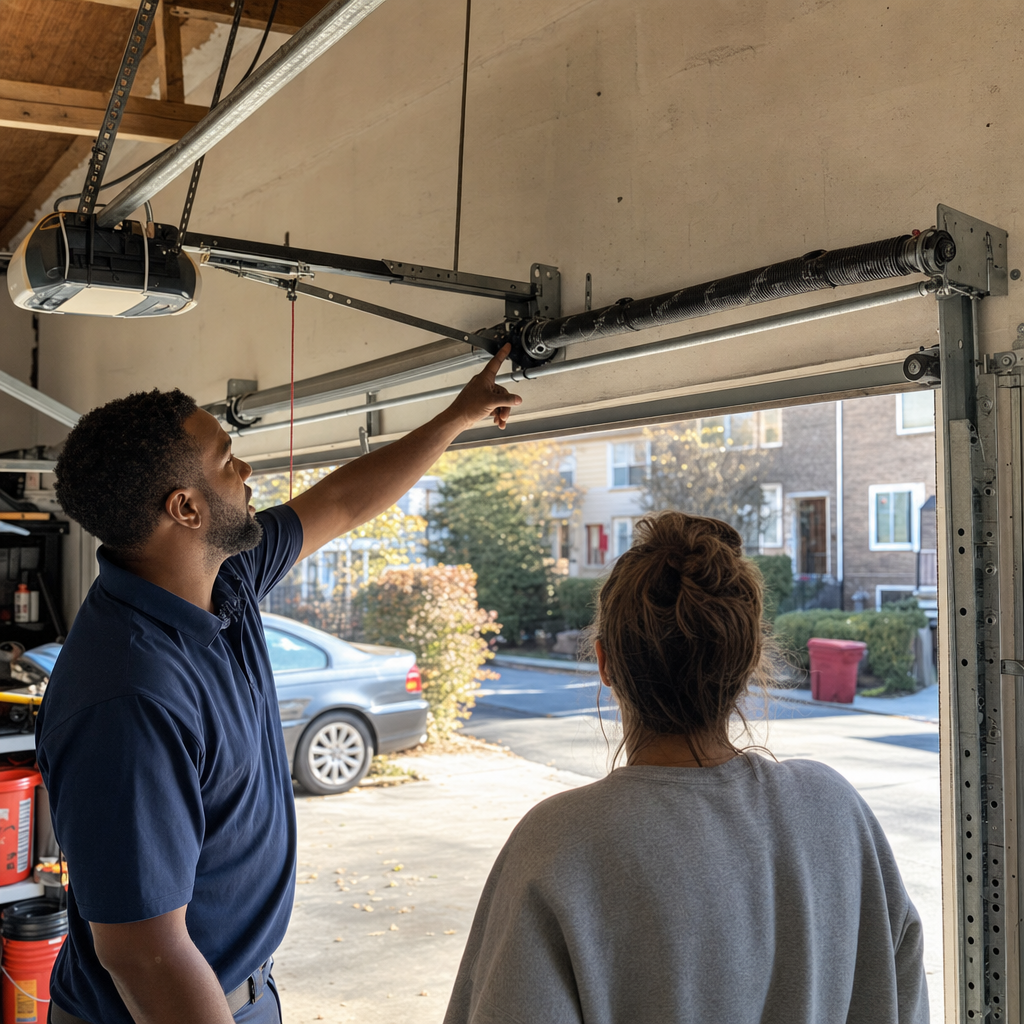
Why Your Garage Door Won’t Close in Pennsylvania — And Whether You Can Fix It Tonight
A garage door that won’t close is most often caused by misaligned safety sensors, a disconnected opener carriage, or ice binding the door to the floor — all fixable in under 20 minutes if you know which one you’re dealing with. If your door is stuck open right now, secure your interior house door first, then run through the five failure states below to find your match. For Emergency Garage Door Repair in Pennsylvania, PA, call Fortress Garage Door Service Pennsylvania at (855) 938-5455 — we answer until late evening and prioritize doors that won’t secure.
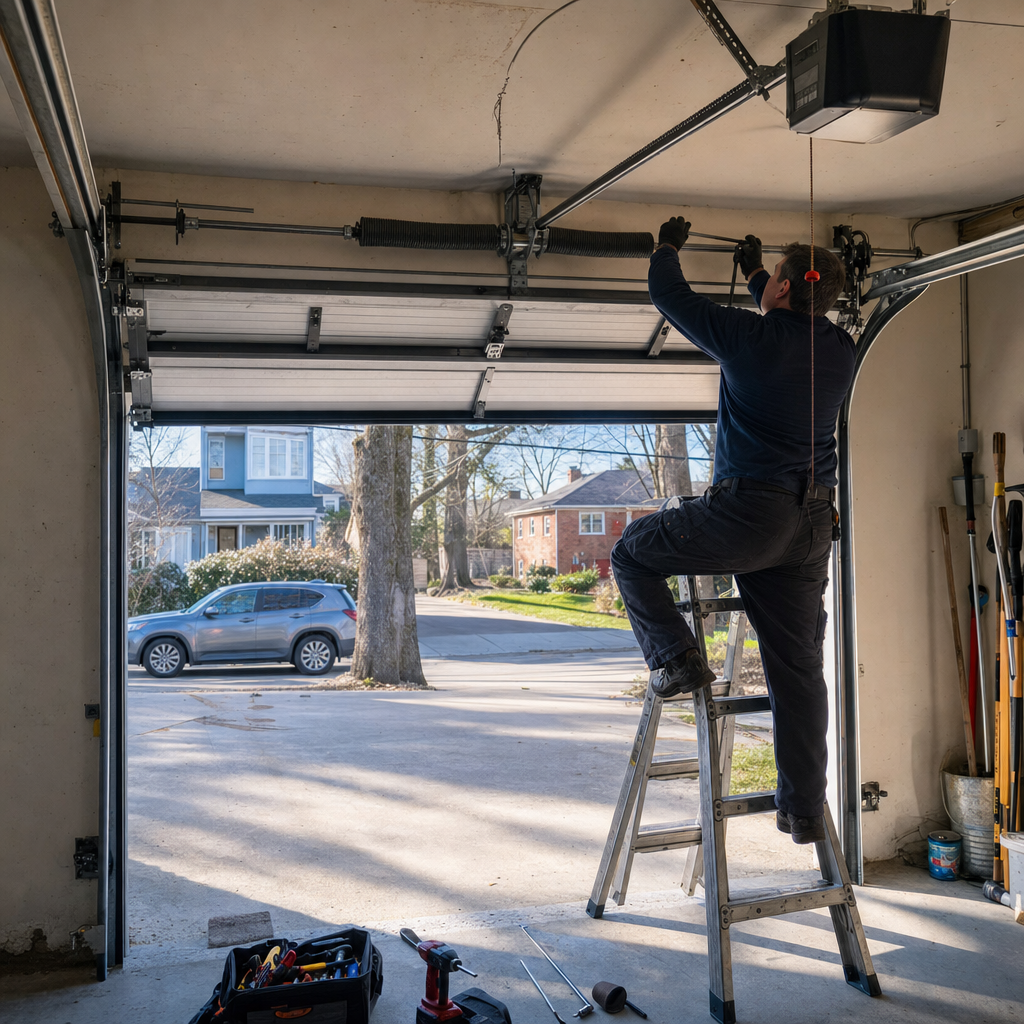
Pennsylvania Weather Makes This Problem Worse Than It Looks
Pennsylvania’s freeze-thaw cycles hit garage doors harder than most homeowners realize. We’ve pulled into driveways in Lansdowne at 6 AM where the overnight drop to 18 degrees fused the rubber weatherstrip to a frost-heaved concrete slab — the opener strains, the motor hums, and the door sits there like it’s welded shut. Jason Reed, our owner and lead technician, grew up in Lansdowne helping his father maintain rental properties through exactly these winters, so we’ve learned to check the obvious before we assume the mechanism is broken.
The housing stock across Pennsylvania compounds this. Post-war ranch homes with uninsulated attached garages, 1980s colonials with original builder-grade openers, and newer construction with tight envelope seals that trap humidity — each creates a different “won’t close” scenario. In older Montgomery County neighborhoods, we’ve seen sagging header framing throw off track alignment just enough to trigger the opener’s force sensors. In newer developments near King of Prussia, low-voltage LED bulbs in the opener housing can scramble the logic board’s radio frequency. The fix depends on which Pennsylvania garage you’re standing in.
Here’s what to know: a door stuck open is a security vulnerability, not merely a hassle. If your garage connects to your kitchen or mudroom, that open door is an invitation. While you diagnose, lock your interior door, activate any garage motion lights, and consider parking in the driveway rather than leaving the garage exposed with a vehicle inside.
The Five “Won’t Close” States — Match Yours and Act
After eleven years and over a thousand Pennsylvania service calls, we’ve learned that “won’t close” tells us almost nothing until we know how it won’t close. These five states require different responses — some you handle, some we handle.
State 1: Opener Runs, Door Doesn’t Move
The motor chatters or the chain/belt moves, but the door stays put. This almost always means the carriage disconnect has been triggered — usually by pulling the red emergency release cord, sometimes by a failed engagement mechanism. Look for the trolley hanging below the rail, not latched into the carriage. Re-engaging it takes thirty seconds: pull the cord toward the opener to reset the spring-loaded lever, then run the opener until the trolley clicks back into position.
When to call: If the trolley won’t re-engage or the disconnect keeps happening, the carriage gear is stripped. That’s a $120–$320 opener repair depending on whether we replace the carriage assembly or the full rail system. We work on what you have — LiftMaster, Chamberlain, Genie, and others — and we don’t upsell a full opener replacement when the rail gear will outlast the motor.
State 2: Opener Hums, Nothing Moves
The motor energizes but the door doesn’t budge. First, check for a broken spring — the opener’s motor isn’t designed to lift a 150-pound door without spring assist. Look above the door for a gap in the torsion spring coil, or along the side walls for a dangling extension spring. Do not attempt to operate the door. A broken spring means the full weight of the door is unsupported, and forcing it can snap cables, warp tracks, or cause the door to crash down.
Safety note: Garage door springs store lethal tension. In Pennsylvania, we’ve seen homeowners injured by DIY spring replacement more than any other garage door task. This is when you call for Garage Door Repair — not tomorrow morning, tonight. Spring repair runs $180–$340, and we carry common spring sizes for Clopay, Amarr, and Wayne Dalton doors on every truck.
State 3: Door Starts to Close, Then Reverses
The door descends six inches to two feet, then retreats to the open position — a common case of Why Does my Garage Door Reverse? (Pennsylvania, PA). This is the safety sensor or travel limit speaking. The sensors — those two small boxes facing each other near the floor — require an unobstructed infrared beam. In Pennsylvania’s fall-to-winter transition, we’ve found cobwebs dense enough to scatter the beam, single leaves blown in during October storms, and storage bins that “weren’t there yesterday” blocking the path.
Clean both sensor lenses with a dry cloth, verify the LED lights on both units glow steady (not blinking), and remove anything between them. If the lights are off entirely, check for a knocked wire — snow shovels and recycling bins are frequent culprits.
If sensors check out, the close limit may need recalibration. The opener thinks the floor is higher than it is. This happens after manual door operation, power outages, or — in Pennsylvania especially — after the concrete floor heaves slightly in freeze-thaw. Limit adjustment varies by brand; Chamberlain and LiftMaster units use screwdriver dials on the motor housing, while Genie openers often require button-sequence programming. If you’re not confident, we’ll calibrate it during a standard service call.
State 4: Door Closes Manually, But Not With the Opener
Disconnect the opener and the door glides down smoothly. Reconnect it, and nothing happens, or the opener strains without result. This points to opener carriage failure or stripped drive gear inside the motor housing. The motor runs but can’t transfer power to the rail.
We’ve replaced hundreds of these in Pennsylvania, particularly on Craftsman and Raynor openers from the 2005–2015 era where the nylon drive gear was undersized for the door weight. The repair is straightforward — new gear and sprocket assembly — and runs $120–$320. We diagnose this in ten minutes and carry the parts.
State 5: Nothing Happens At All
No light, no hum, no click. Start at the outlet: garage GFCI outlets trip more often than you’d think, especially in Pennsylvania’s damp spring weather. Reset it. Check the opener’s power cord — we’ve found them partially unplugged by shifting storage, chewed by mice in rural Chester County garages, or corroded at the plug from years of floor moisture.
If power is solid, the logic board may have failed — often after a power surge or when a homeowner installs LED bulbs that emit radio frequency interference. (Yes, really. Certain LED bulbs will kill an opener’s receiver.) Logic board replacement runs toward the upper end of opener repair, $250–$320, and we always verify whether a new opener at $250–$550 installed makes more sense than nursing a fifteen-year-old unit.
Pennsylvania’s Hidden Culprit: The Ice Seal
Here’s something the generic troubleshooting guides miss: ice binding. When Pennsylvania overnight temperatures drop below 25 degrees and daytime sun melts snow against the door, that water refreezes at the threshold. The opener’s force setting — correctly calibrated for normal operation — can’t overcome the ice weld. The motor hums, reverses, or trips the overload.
Jason’s field fix, developed over eleven Pennsylvania winters: warm water along the seal, never forced operation. Pour slowly from a bucket (not boiling — thermal shock cracks weatherstrip), then dry the area and operate the door. We’ve seen homeowners destroy openers by repeatedly hitting the button, hoping force will prevail. It won’t. The opener’s force sensor is doing its job — protecting the mechanism from damage.
In areas with heavy road salt use — think Delaware County near I-95 — that salt accelerates corrosion at the bottom fixtures, compounding the problem. We inspect these during every service call and replace rusted fixtures before they fail.
What “Won’t Close” Repair Costs in Pennsylvania
Most “won’t close” calls resolve in the $120–$340 range. Here’s how specific repairs break down:
| Repair | Typical Range | When It Applies |
|---|---|---|
| Sensor Realignment / Cleaning | $120–$180 | Beam interruption, knocked sensors |
| Spring Repair | $180–$340 | Broken torsion or extension spring |
| Cable Repair | $130–$250 | Frayed or snapped lift cable |
| Opener Repair | $120–$320 | Carriage, gear, or logic board failure |
| Track Realignment | $120–$240 | Bent or shifted track preventing closure |
| Roller Replacement | $110–$220 | Worn rollers causing binding in descent |
Full door replacement — rarely needed for a “won’t close” issue — runs $700–$2,200 installed. We don’t sell doors to people who need sensors cleaned. Over 1,000 neighbors have trusted us because we work on what you have.
When This Becomes an Emergency Call
Three situations cross from “troubleshoot in the morning” to “call now”:
- Broken spring or cable with the door stuck open: The door is unsecured and unsafe to operate. We carry springs for Clopay, Amarr, Wayne Dalton, and other major brands, and we prioritize these calls.
- Door stuck open overnight in a high-traffic area: If your garage faces the street in a Pennsylvania neighborhood with foot traffic, that open door is a security gap. We’ll secure it tonight.
- Vehicle trapped inside with morning commute pending: We’ve made 10 PM calls in Ardmore and 6 AM calls in Conshohocken for exactly this. Fast response when it matters most.
Best Garage Door Repair in Pennsylvania, PA is real and available — not a voicemail promise. Jason Reed answers directly when he’s not on a ladder, and our callback window is measured in minutes, not hours.
What You Can Check in 10 Minutes — And What You Shouldn’t Touch
Here’s the honest split: sensors, disconnect re-engagement, and ice removal are homeowner-safe. Springs, cables, and high-tension hardware are not. The owner is on the job at Fortress — Jason Reed personally handles the diagnosis and repair — so when we say “call a professional,” it’s because we’ve seen what happens when people don’t.
Your garage door is your home’s first line of defense. When it won’t close, that defense is down. Our Garage Door Repair in Pennsylvania covers everything from this troubleshooting scenario to full system replacement, always with the same technician who answers your questions.
Key Takeaways
- Match your symptom to the five states above before assuming the worst
- Pennsylvania ice seals are a real, seasonal cause — use warm water, not force
- Broken springs and cables require professional repair; do not operate the door
- Most “won’t close” repairs fall between $120–$340
- Sensor issues are the most common fix and often free if you clean and realign them yourself
FAQs
Most “won’t close” repairs in Pennsylvania cost between $150 and $600, with the majority resolving in the $120–$340 range. Sensor realignment runs $120–$180, spring repair is $180–$340, and opener repairs range from $120–$320. Call (855) 938-5455 for an exact quote — estimates are free.
You can fix sensor obstructions, re-engage a disconnected carriage, and melt ice binding — usually in under 20 minutes. You should not attempt spring, cable, or track repairs yourself; these components store lethal tension and require professional tools and training. If it’s not built to hold, it’s not built — and your safety is what needs to hold here.
This happens because the safety sensors detect an interruption or the travel limit is miscalibrated. Check for cobwebs, leaves, or objects blocking the sensor beam, clean the lenses, and verify both sensor LEDs glow steady. If the problem persists, the close limit needs recalibration — a service call we handle same-day in most Pennsylvania areas.
Repair is cheaper if the opener is under 10 years old and the issue is isolated to the carriage, gear, or logic board ($120–$320). Replacement makes sense when the opener is 12+ years old, has multiple failures, or lacks modern safety features. We’ll tell you which category you’re in — we don’t gain from selling openers to people who need $140 sensor work.
If you’d rather have it looked at, Fortress Garage Door Service Pennsylvania offers a no-pressure assessment in Pennsylvania — call (855) 938-5455. Jason Reed, Owner & Lead Technician, handles the diagnostic personally, and we carry parts for LiftMaster, Chamberlain, Genie, and five other major brands on every truck.
Written by Jason Reed, Owner & Lead Technician at Fortress Garage Door Service Pennsylvania, serving Pennsylvania, PA.