
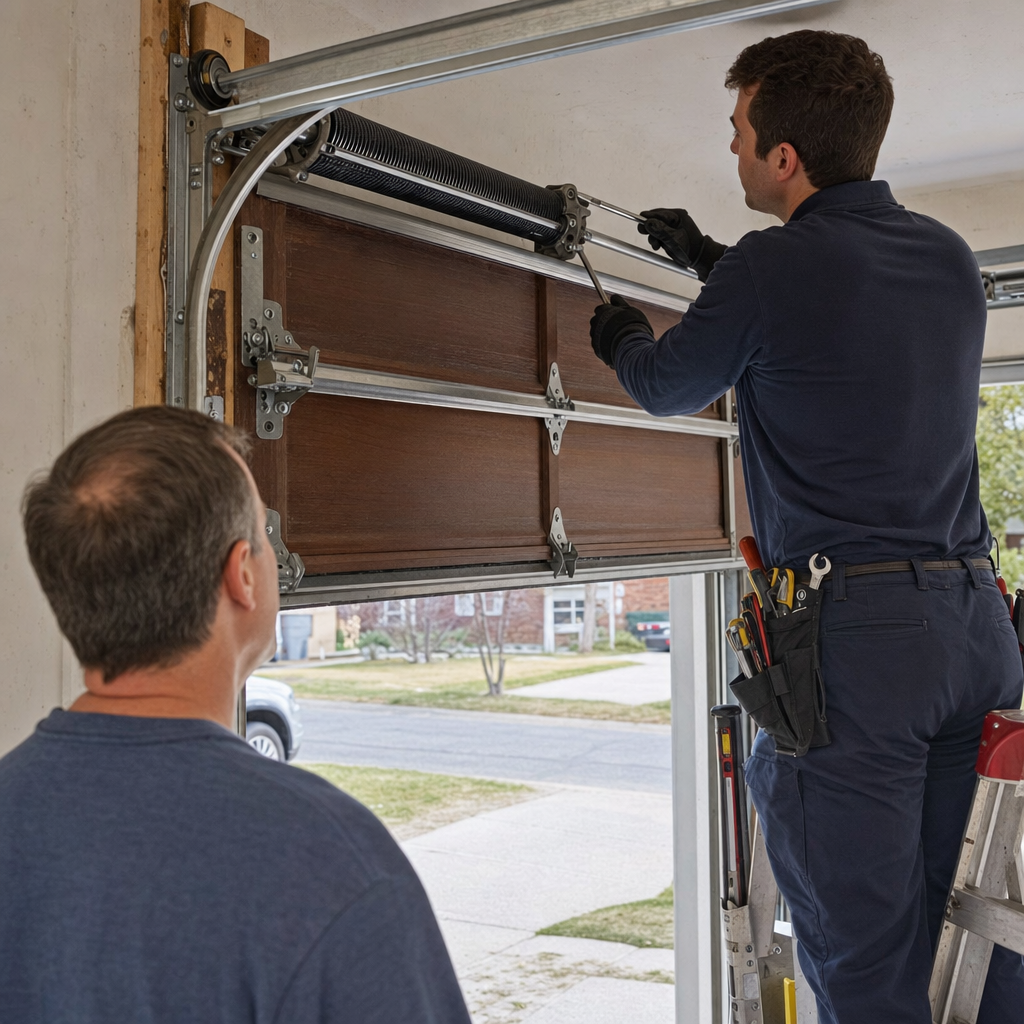
Garage Door Roller Replacement in Pennsylvania: What Worn Rollers Actually Cost You Before They Fail
Garage door roller replacement in Pennsylvania typically runs $110–$220 for a standard 10-roller residential door and most jobs finish in under 90 minutes. We carry nylon and steel rollers for every common shaft size, including the proprietary diameters used on certain Clopay and Wayne Dalton systems. Call (855) 938-5455 for a free estimate — we’ll tell you whether your rollers are actually the problem before we roll the truck.
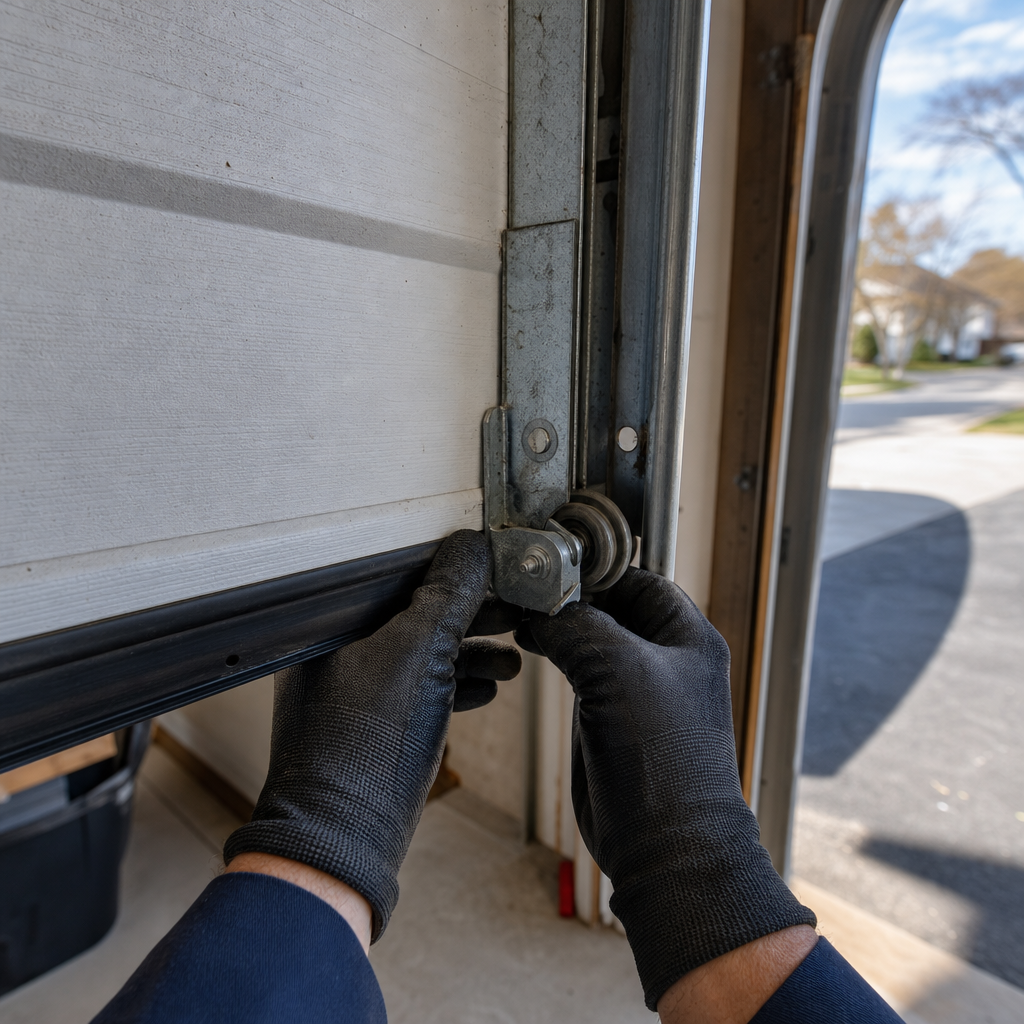
Nobody thinks about their garage door rollers until the door sounds like it’s dragging a shopping cart up a gravel driveway. By that point, the worn rollers have usually started chewing the inside of the track. Now it’s a bigger job. We’ve seen this exact progression hundreds of times across Pennsylvania — in the row homes of Lansdowne where Jason Reed grew up, in the split-levels of Broomall, in the newer construction around King of Prussia where attached garages share ceiling joists with second-floor bedrooms. The noise is the symptom. The real damage is mechanical, and it’s spreading.
Rollers are the most overlooked maintenance item on a residential garage door. In Pennsylvania’s climate — humid summers, wet winters, freeze-thaw cycles that push moisture into every unsealed gap — the nylon-vs-steel decision has a real noise and longevity outcome that changes over a ten-year ownership horizon. Most roller pages just list options. We’re going to make the case for when each type is actually the right call, based on what we’ve learned from eleven years of opening doors that other companies already “fixed.”
How to Know Your Rollers Are Actually the Problem
Customers call us describing a “grinding noise” or “shaking door” and assume it’s the opener. Half the time, it’s the rollers. Here’s what we check on every service call in Pennsylvania:
- Visible wobble on the axle: The roller should spin true. If it wobbles side-to-side, the bearing race is shot and the wheel is walking in the track.
- Flat-spotting on the wheel: Nylon rollers develop flat spots from sitting in one position; steel rollers develop pitting. Both create a rhythmic thump you can feel through the wall.
- Track damage inside the curve: Worn rollers don’t roll — they slide. That friction polishes the track interior and eventually deforms the steel. Track realignment runs $120–$240; roller replacement is cheaper.
- Opener struggling on the first pull: The motor compensates for rolling resistance until it can’t. We’ve replaced openers that were fine — the real problem was rust-seized steel rollers in an uninsulated garage.
Jason’s benchmark: inspect rollers every 2–3 years, replace when there’s visible wobble or flat-spotting. Catching it here prevents track damage, opener strain, and the emergency call that comes when a roller finally jumps the track and jams the door shut.
Nylon vs. Steel Rollers: The Pennsylvania Climate Changes the Math
This is where most websites drop the ball. They’ll tell you nylon is quieter and steel is stronger, as if that’s useful. The real question is: what’s your garage like, and how long do you plan to own the door?
Nylon rollers run quieter — no debate. The wheel material absorbs vibration instead of transferring it through the axle into the track, then the wall, then your bedroom ceiling. For attached garages in Pennsylvania neighborhoods like Ardmore or Drexel Hill, where the master bedroom sits directly above, nylon can be the difference between sleeping through a 6 AM departure and not. Nylon doesn’t require lubrication, which matters because Pennsylvania homeowners are not lubricating their rollers annually. No one is.
The tradeoff: nylon wears faster on heavy doors. A solid wood door or an insulated steel door over 150 pounds will flatten nylon rollers in 5–7 years under daily use. We’ve replaced nylon rollers on heavy Amarr doors in Media that were installed by well-meaning companies who prioritized quiet over durability.
Steel rollers last longer on heavy doors — 10–15 years is realistic with proper maintenance. But they transfer every vibration into the structure. In a detached garage in rural Chester County, who cares? In a townhouse in Conshohocken where the garage shares a wall with the living room, you’ll hear every cycle. And here’s the Pennsylvania-specific problem: steel rollers in uninsulated garages rust at the axle point over 3–5 wet winters. The rust creates uneven rolling resistance that stresses the opener motor. Homeowners don’t connect the dots until the opener starts struggling, then they’re quoted $250–$550 for opener replacement when $110–$220 in rollers would have prevented it.
Our call: nylon for attached garages with standard-weight doors, steel for detached garages or heavy doors where the owner will actually maintain them. If you’re not sure which you have, we’ll tell you on inspection. We work on what you have — no upsell to a full door replacement because your rollers are worn.
Bearing Count, Shaft Diameter, and the Details That Matter
Roller quality isn’t just about wheel material. The bearing count — 10-ball versus 13-ball — is a durability indicator, not a marketing number. More balls distribute load across more contact points. For a door that cycles 4–6 times daily (two-car family, both working), 13-ball bearings mean lower per-ball load and longer service life. We stock both and install based on your actual cycle count, not a one-size-fits-all spec.
Shaft diameter is where brand-specific knowledge matters. Certain Wayne Dalton and Clopay door systems use proprietary roller shaft diameters that don’t accept standard 7/16″ hardware. We’ve seen other companies force-fit standard rollers, strip the roller bracket holes, and create a bigger problem. Jason stocks the right hardware for these applications. If it’s not built to hold, it’s not built — and that includes using the correct part for the system.
Here’s what roller replacement typically costs when bundled with related services:
| Service | Price Range |
|---|---|
| Roller Replacement (standard 10-roller door) | $110–$220 |
| Spring Repair | $180–$340 |
| Cable Repair | $130–$250 |
| Track Realignment | $120–$240 |
| Opener Repair | $120–$320 |
| Full Garage Door Repair (diagnostic + multiple items) | $150–$600 |
When Roller Replacement Becomes Urgent
A failed roller isn’t just noisy — it’s a security risk. A door that won’t fully close or that jams open creates an access gap. We’ve responded to Emergency Garage Door Parts in Pennsylvania, PA calls at 10 PM because a roller jumped the track and the homeowner couldn’t secure their garage before a storm or before leaving for work the next morning. Fast response when it matters most isn’t a slogan for us; it’s why we keep emergency service available.
The other urgent scenario: a roller with a seized bearing that the opener keeps trying to pull. The motor overheats. The logic board fails. Now you’re looking at garage door parts replacement that could have been avoided. We check roller condition on every opener service call for exactly this reason.
What to Expect When We Replace Your Rollers
Jason Reed arrives as the owner and lead technician — the person who answers for the work is the same person doing it. No rotating crew, no subcontractor you’ve never met. We inspect the full door system: springs, Garage Door Cable Replacement in Pennsylvania, PA cables, track alignment, opener force settings. If rollers are the only issue, we say so. If the track is already damaged from worn rollers, we show you.
Replacement takes 45–90 minutes for a standard residential door. We use the correct rollers for your door weight, brand, and shaft diameter. We test balance and travel after installation. And we explain what we found — not because we like talking, but because a homeowner who understands their door makes better decisions about maintenance.
Over 1,000 neighbors have trusted us across Pennsylvania, backed by 1,007 verified reviews at a 4.7-star average. That volume reflects consistency across hundreds of real jobs, not a handful of curated testimonials. We’re the company people call when another technician has already been out twice and the door still isn’t right.
FAQs
Garage door roller replacement costs $110–$220 for a standard 10-roller residential door in the Pennsylvania market. The price covers standard nylon or steel rollers, labor, and testing; proprietary shaft sizes or heavy-duty 13-ball bearings may run toward the higher end. Call (855) 938-5455 for an exact quote — estimates are free.
Repairing a worn roller isn’t practical — once the bearing is shot or the wheel is flat-spotted, replacement is the only fix. At $110–$220, roller replacement is among the most affordable Garage Door Parts services and prevents costlier damage to tracks and openers. Call (855) 938-5455 for an exact quote — estimates are free.
Yes — we carry nylon and steel rollers for all common shaft sizes, including proprietary diameters for Wayne Dalton and Clopay systems, so most roller replacements in Pennsylvania are completed same-day. Best Garage Door Parts in Pennsylvania, PA emergency service is available when a stuck door creates a security or access crisis. Call (855) 938-5455 for an exact quote — estimates are free.
Nylon rollers last 5–7 years on standard-weight doors in Pennsylvania; steel rollers last 10–15 years but rust at the axle in 3–5 winters if the garage is uninsulated. Humidity and freeze-thaw cycles accelerate wear, so we recommend inspection every 2–3 years. Call (855) 938-5455 for an exact quote — estimates are free.
Ready for a Quieter, Smoother Door?
If your garage door sounds like it’s protesting every cycle, the rollers are the first place to look. We’ll inspect, diagnose, and replace with the right hardware for your door — no upsell, no subcontractor, no surprises. Call (855) 938-5455 today for a free estimate. Jason Reed, Owner and Lead Technician at Fortress Garage Door Service Pennsylvania, will handle the work personally.
Written by Jason Reed, Owner & Lead Technician at Fortress Garage Door Service Pennsylvania, serving Pennsylvania, PA.
What Our Customers Say
"Keypad stopped working, which I assumed meant a whole new system. It was the batteries and a reprogram. He charged me the minimum service call and told me how to do it myself next time."
— Elena Mendoza"Opener works, remotes are programmed, no complaints on the work. Took three days to get on the schedule though, so if you've got a car trapped inside, say so when you call."
— Javier Flores"Track was bent and two of the rollers were shot. He straightened what he could, swapped the rollers for nylon ones, lubricated everything, and had it done in about an hour."
— Rachel Miller