
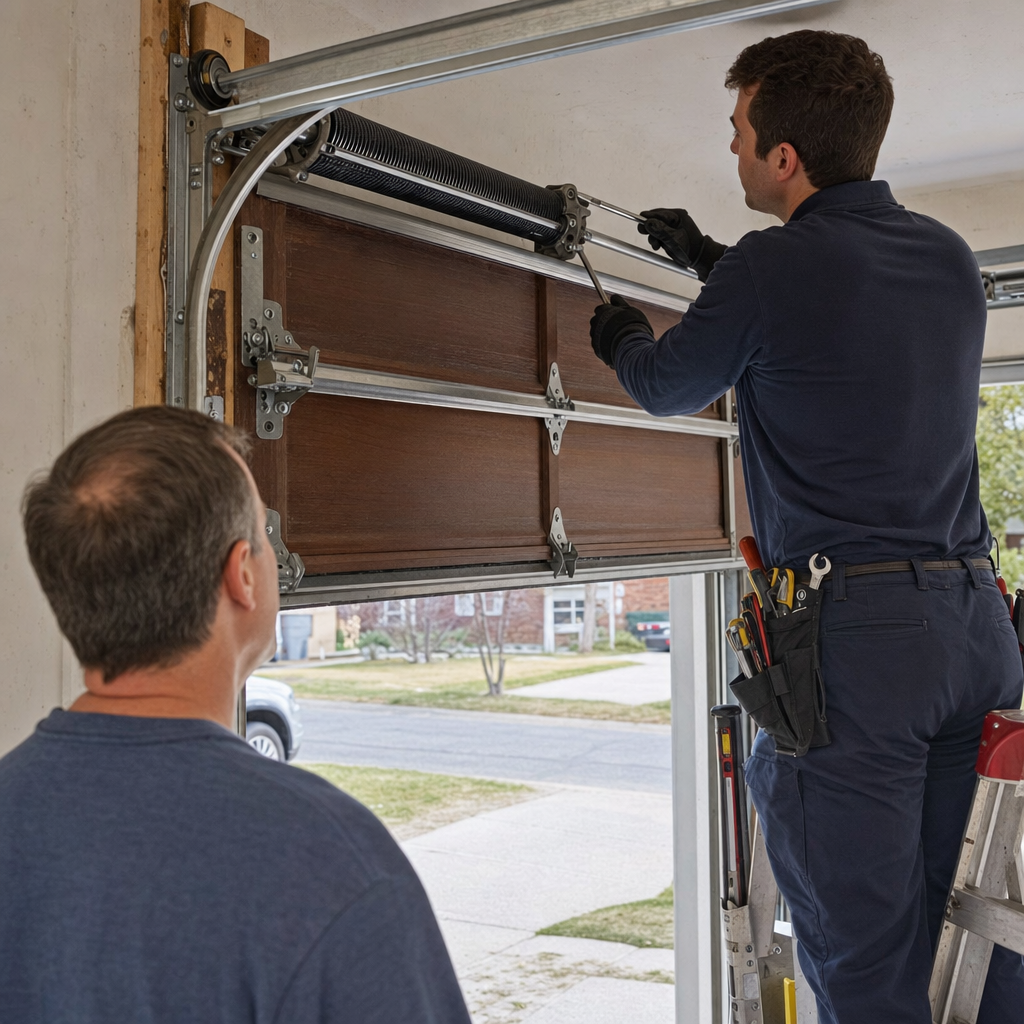
New Garage Door Installation Cost in Pennsylvania: What You’ll Actually Pay
New Best Garage Door Installation in Pennsylvania, PA typically runs $700–$2,200 all-in, with most homeowners landing between $1,100 and $1,600 for a quality steel door with standard hardware, opener compatibility check, and old door disposal. The exact figure depends on whether your existing frame needs work, what insulation level matches your home, and whether you’re dealing with a straightforward swap or a full reframe. Call (855) 938-5455 and Jason Reed will walk you through your specific situation—estimates are free, and we don’t charge to look.
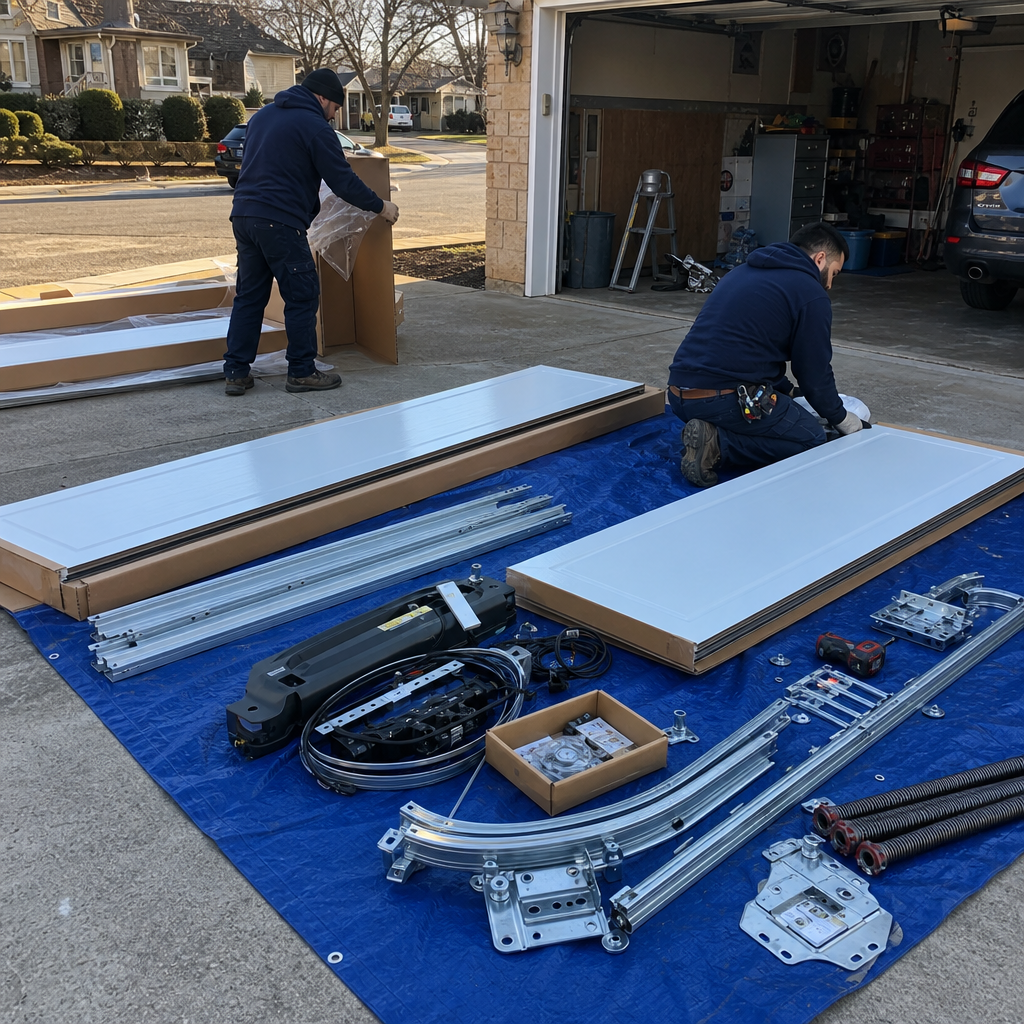
Pennsylvania’s housing stock tells its own story. From the stone colonials of Chester County to the post-war ramblers in Levittown and the split-levels carpeting the suburbs around Pittsburgh, garages here span seven decades of construction standards. That variety means the “door itself” is rarely the whole job. We’ve pulled into driveways in Bala Cynwyd where the header board was rotted through behind aluminum trim, and we’ve measured openings in State College that were out of square by nearly two inches—discoveries that don’t show up on a big-box quote sheet but absolutely show up on your final invoice. We’re going to break down what drives the real number, not the showroom number.
What’s Actually in That $700–$2,200 Range?
Most cost guides online stop at “door plus labor.” That’s not how this works on a real job site. Here’s how we build an estimate when Jason Reed shows up to measure:
| Component | Typical Range |
|---|---|
| Steel garage door (24- or 26-gauge) | $650–$1,400 |
| Track, hardware & spring system | $180–$350 |
| Old door removal & disposal | $75–$150 |
| Opener compatibility check / adjustment | $0–$120 |
| Header or frame repair (when needed) | $150–$450 |
| Insulation upgrade (R-13 to R-16) | $200–$400 add-on |
| Installation labor | $300–$500 |
| Total typical all-in | $700–$2,200 |
The low end assumes a straightforward replacement: standard 16×7 steel door, clean opening, existing opener plays nice with the new door’s weight and travel specs. The high end catches the jobs where we find a sagging header, a 1980s track system that won’t accept modern low-headroom hardware, or a homeowner who wants a fully insulated Clopay Gallery collection door with windows and a WiFi-enabled LiftMaster opener to match.
That $75–$150 disposal line? Most competitors bury it or don’t mention it until the contract’s in front of you. We don’t operate that way. Jason grew up in Lansdowne helping his father maintain rental properties, and the lesson stuck: surprises are for birthdays, not renovation bills.
Why Pennsylvania’s Climate Should Drive Your Door Spec
Here’s what generic cost guides won’t tell you: an attached garage in Pennsylvania functions as a thermal buffer zone whether you planned it that way or not. In January, when the polar vortex drops overnight lows into single digits across the Lehigh Valley, an uninsulated steel door on an attached garage is essentially a 16-foot radiator bleeding heat into your sidewalls and the room above. We’ve had homeowners in Bucks County tell us their bedroom above the garage never held temperature until we swapped their hollow-core door for an R-16 insulated model.
The math isn’t complicated. A typical 16×7 uninsulated steel door has an effective R-value near 2. Step up to an R-13 insulated door and you’ve cut conductive heat loss by roughly 85 percent through that surface. At R-16, you’re in territory where the door stops being a liability and starts being a modest asset. In Pennsylvania’s climate zone—where heating degree days run 4,000 to 6,000 annually depending on elevation—that upgrade typically pays for its $200–$400 premium in 3–5 years of reduced heating load, faster if your garage shares a wall with a finished basement or living space.
Detached garages are a different calculation. If you’re not heating the space and it’s not thermally connected to your house, a basic non-insulated door is honest money. We’ll tell you that straight. We’re not here to sell you what you don’t need.
Steel Gauge, Road Salt, and the Door You’ll Still Own in 2035
Walk into a showroom and every door looks substantial. The difference between 24-gauge and 26-gauge steel doesn’t show up until year five or seven, and by then you’re not thinking about the installer.
Here’s the practical breakdown:
- 24-gauge steel (thicker, ~0.0239″): Resists the dent from a basketball or a bumped bumper. Holds paint finish longer against Pennsylvania’s freeze-thaw cycling and the road salt that kicks up from your driveway January through March. Appraisers and buyers notice—it reads as quality construction. Most Clopay and Amarr mid-grade doors spec this.
- 26-gauge steel (thinner, ~0.0179″): Lighter, cheaper, adequate for a detached garage with light use. Dents more readily. In our experience across Pennsylvania, the paint film on 26-gauge doors starts showing stress at the panel corners around year six or seven, especially on south-facing exposures.
We install both, depending on the application. But we’ll flag this: if your driveway sees the salt truck’s residue all winter and you’re planning to stay in the house, the 24-gauge upgrade usually returns its cost in appearance longevity alone. Raynor and Wayne Dalton both build excellent 24-gauge residential lines at competitive price points, and we work with what fits your situation—not what moves our margin.
Brand-Agnostic Selection: What Differentiates Clopay, Amarr, Wayne Dalton, and Raynor
Jason’s trained on eight major brands—LiftMaster, Chamberlain, Genie, Clopay, Amarr, Wayne Dalton, Craftsman, and Raynor—and we don’t push one because it’s easier to stock. At the same approximate price point, here’s how the residential lines actually differ:
Clopay dominates the Northeast distribution network, which means parts availability is rarely an issue. Their Gallery and Classic collections offer the widest range of window inserts and overlay styles if curb appeal is a priority. The pinch-resistant panel design is standard, which matters if you’ve got kids.
Amarr (owned by Entrematic) tends to spec slightly heavier hardware packages at equivalent price tiers. Their Stratford and Lincoln lines use a triple-layer construction—steel-insulation-steel—that’s genuinely quieter in operation. If your bedroom is above or adjacent to the garage, the acoustic difference is noticeable.
Wayne Dalton offers the most flexible track and spring configurations for low-headroom or high-lift applications. In older Pennsylvania homes with basement stairs directly beneath the garage, that engineering flexibility can eliminate a costly header modification.
Raynor builds in a smaller number of facilities with tighter quality control, which translates to more consistent panel alignment and weatherseal compression. Their Advantage and General lines are what we spec when a homeowner tells us “I want to do this once and not think about it again.”
We work on what you have. That philosophy cuts both ways—we’re not going to tell you a Clopay is “better” if your existing Amarr hardware is serviceable and your goal is honest function at honest cost.
The Hidden Costs: Header Repairs, Frame Work, and What We Find When We Measure
This is where the owner-on-the-job model matters. When Jason Reed measures your opening, he’s also checking four things that don’t appear on a phone quote:
- Header condition: The beam above your door opening carries the load of everything above it. In pre-1990 Pennsylvania construction, we’ve found headers built from doubled 2×10s with no engineered lumber, sometimes rotted at the ends where flashing failed. Repair runs $150–$450 depending on span and access.
- Opening squareness: A door can tolerate about 3/8″ of out-of-square across a 16-foot span. Beyond that, we shim or reframe—otherwise the door seals poorly and the opener works against itself. In Doylestown and older Allentown neighborhoods, we see 1″+ deviations regularly.
- Existing track compatibility: 1980s and 1990s track systems used different roller spacing and bracket geometry. Sometimes we can adapt; sometimes the entire vertical and horizontal track needs replacement to accept a modern door’s hardware. That’s $180–$350 in parts.
- Opener capacity check: A heavier insulated door can overload an older 1/2-horsepower opener. We verify pull force and cycle rating before the install, not after the new door is hung and the opener stalls mid-travel.
When the owner does the install, there’s no “the subcontractor measured wrong” deflection. Jason’s name is on the job from first measurement to final balance test. Over 1,000 neighbors have trusted us with that accountability, and the 4.7-star average across 1,007 reviews reflects what happens when the same person quotes the work and stands behind it.
Single-Point Accountability: Why the Owner-on-the-Job Model Changes the Math
Franchise operations optimize for throughput. The scheduler books, the measurer visits, the install crew arrives—sometimes three different people with three different understandings of what you were told. When something doesn’t fit, you’re in the middle of a phone chain.
Fortress doesn’t work that way. Jason Reed is Owner and Lead Technician. The person who answers your call about Garage Door Installation is the same person who shows up with the tape measure and the level. If it’s not built to hold, it’s not built—and that standard applies to the relationship, not just the hardware.
Emergency Garage Door Installation in Pennsylvania, PA is available when a stuck or broken door creates a security or access crisis. Fast response when it matters most isn’t a slogan; it’s how we’ve operated for 11 years. Your garage door is your home’s first line of defense, and a door that won’t close or open leaves you exposed.
FAQs
Most homeowners pay between $1,100 and $1,600 for a complete installation, with the full range running $700–$2,200 depending on door spec, insulation level, and whether structural repairs are needed—see our guide on How Much Does Garage Door Installation Cost? (2026 Price Guide) — Pennsylvania, PA for full details. The door itself is only part of the total—disposal of the old door, opener compatibility adjustments, and header condition all move the number. Call (855) 938-5455 for a free estimate tailored to your specific opening and we’ll break down every line item before you commit.
Repairs typically run $150–$600, making them the better choice if the door is under 15 years old, the panels aren’t rusted through, and the frame is sound. Once you’re facing multiple failed components—springs, cables, rollers, and a warped panel—the cumulative repair cost often approaches 60–70% of a new door with zero warranty left on the old one. We don’t upsell replacements when a repair is honest money; we’ll show you both numbers and let the math decide.
Same-day installation is possible for standard sizes if we have your door spec in stock, but most jobs require a measurement visit first to confirm opening dimensions, header condition, and opener compatibility. Emergency service is available for security-critical situations where a door is stuck open or detached from its hardware. For planned replacements, we typically measure within 24–48 hours and install within 3–5 business days once the door is ordered.
An attached garage in Pennsylvania’s climate should have at least an R-13 insulated door if any wall connects to heated living space; R-16 is worth the modest upgrade if the garage sits below a bedroom or home office. An uninsulated door (R-2 effective) forces your heating system to work against a 16-foot thermal leak all winter. We’ve measured temperature swings of 15–20 degrees between insulated and uninsulated doors on identical homes in Montgomery County during January cold snaps.
Get Your Exact Number—No Surprises, No Pressure
We’ve been at this for 11 years, and the pattern hasn’t changed: homeowners who get a thorough pre-install inspection never regret the hour spent. The ones who get burned are the ones who trusted a phone quote that couldn’t account for their actual garage. Jason Reed will measure your opening, check your header and frame, test your opener’s capacity, and give you a written estimate with every component spelled out. If it’s not built to hold, it’s not built—and that starts with honest numbers.
Call (855) 938-5455 today for your free estimate. No disposal fees hidden in fine print, no brand pushed for margin, no subcontractor between you and the person doing the work. Just the owner, on the job, from measure to final test.
Written by Jason Reed, Owner & Lead Technician at Fortress Garage Door Service Pennsylvania, serving Pennsylvania, PA.
What Our Customers Say
"Keypad stopped working, which I assumed meant a whole new system. It was the batteries and a reprogram. He charged me the minimum service call and told me how to do it myself next time."
— Elena Mendoza"Opener works, remotes are programmed, no complaints on the work. Took three days to get on the schedule though, so if you've got a car trapped inside, say so when you call."
— Javier Flores"Track was bent and two of the rollers were shot. He straightened what he could, swapped the rollers for nylon ones, lubricated everything, and had it done in about an hour."
— Rachel Miller