
How to Program a Garage Door Opener in Pennsylvania: Start With the Protocol, Not the Buttons
Garage Door Opener services require matching your remote’s security protocol to the correct button sequence on your opener motor unit. Most modern Pennsylvania homes use rolling-code systems (Security+ 2.0 or Intellicode), while pre-1993 openers still run fixed codes that any compatible remote can clone. The learn button color on your motor housing tells you exactly which protocol you’re working with and which programming steps will actually work.
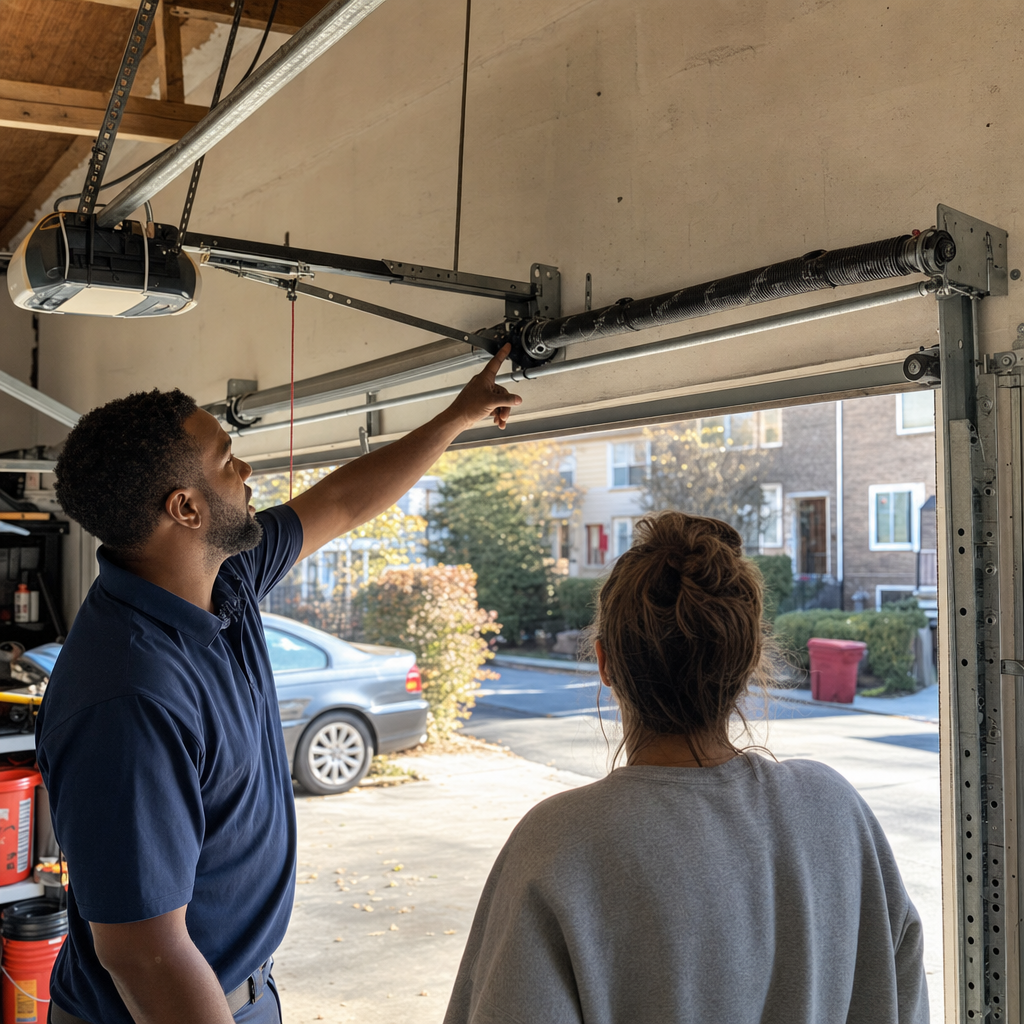
At Fortress Garage Door Service Pennsylvania, we’ve walked into too many garages in Doylestown, Lansdale, and across Bucks County where a homeowner spent an afternoon pressing buttons in the wrong order because a YouTube tutorial skipped the protocol identification step entirely. If your remote isn’t pairing, you’re probably following the right steps for the wrong system. Here’s how to read what you have before you start.
Why Pennsylvania Garages Often Hide Older Systems Than You’d Expect
Pennsylvania’s housing stock runs deep with pre-war colonials, 1960s split-levels, and 1980s townhomes where the original garage door opener outlasted three kitchen renovations. In neighborhoods like Lansdowne—where Jason Reed grew up helping his father maintain rental properties—or older sections of West Chester and York, we’ve found original fixed-code openers still humming along from 1987. They work until they don’t, and when the remote finally dies, homeowners discover no off-the-shelf replacement exists.
The climate here accelerates wear in ways that keep old openers limping: freeze-thaw cycles corrode logic board connections, summer humidity swells remote battery contacts, and road salt tracked into attached garages eats at motor housings. An opener that “works fine” in April can fail to recognize its remote by January. That’s why we always check the protocol first, before we touch a single button.
The Four Protocols: A Technician’s Field Guide
Every programming failure we’ve seen in 11 years traces back to one root cause: treating all openers like they’re the same generation. They’re not. Here’s the protocol framework we use on every service call.
Fixed-Code Systems (Pre-1993)
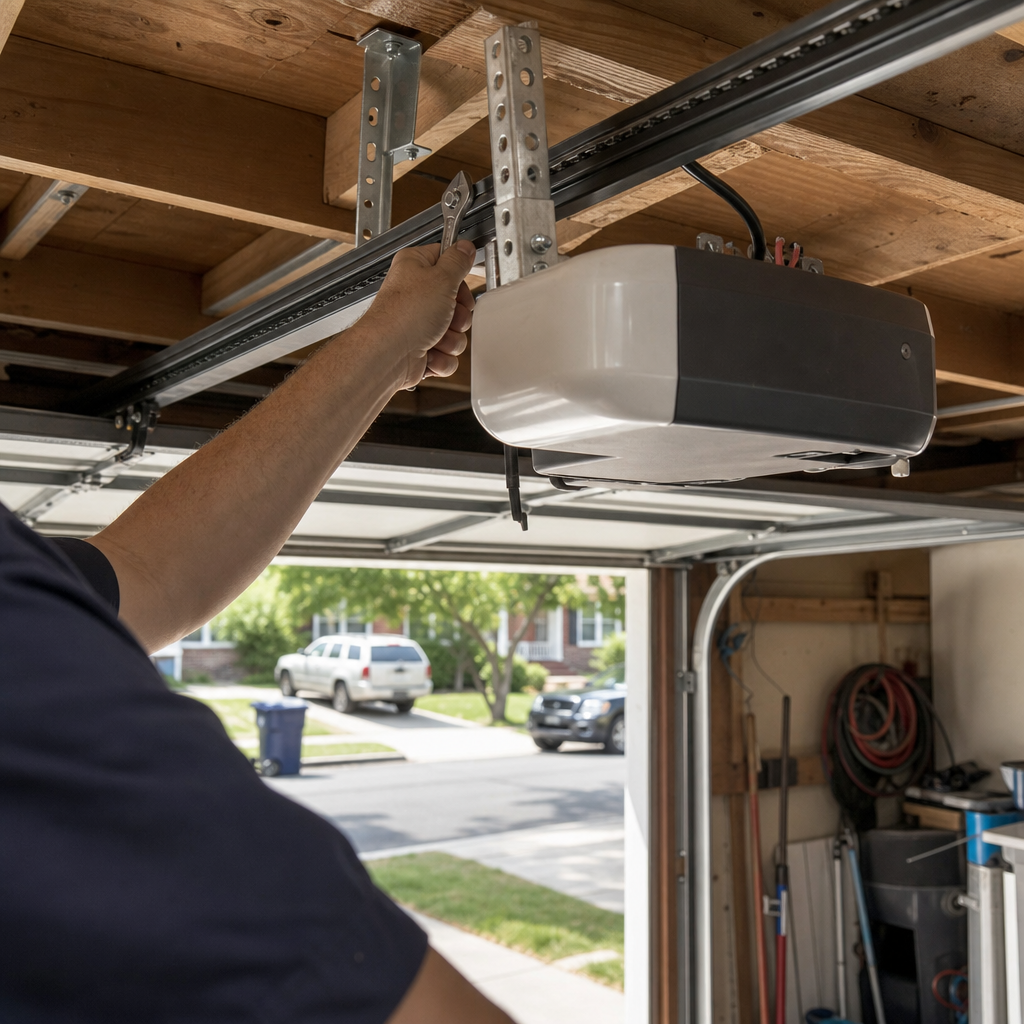
These openers have no learn button. The remote and receiver share a permanent frequency set at the factory or by internal jumpers. Programming means matching that frequency—usually 300, 310, or 390 MHz—by buying a compatible remote and hoping the frequencies align. If your opener motor has no colored learn button anywhere on the housing, you’re in this category.
Security reality: Any remote on your frequency opens your door. Neighbors with the same opener model, old remotes sold at yard sales, even universal remotes scanning frequencies—these are all valid keys to your garage. In Pennsylvania’s denser boroughs where homes sit on 40-foot lots, this isn’t theoretical. We’ve had calls from homeowners in Conshohocken who realized their garage opened when a neighbor came home.
Programming path: There isn’t one, not in the modern sense. You buy a matched-frequency remote and test it. If the opener still has its original manufacturer label intact, that frequency is your only clue.
DIP Switch Systems (1993–1996)
Small sliding switches inside the remote and a matching set inside the opener motor housing. Both must align in identical up/down patterns. No button-pressing sequence—just mechanical matching.
Programming path: Open the remote case, open the motor housing cover, match the switch positions exactly. Test. If it fails, check that no switch is stuck mid-position; we’ve seen corrosion from garage moisture cause this in Pennsylvania’s older homes with poor ventilation.
Security+ Rolling Code (1996–2011, Single-Frequency)
The first “learn button” era. Each press of your remote sends a new code from a pre-generated sequence, preventing replay attacks. The learn button is typically red or purple on LiftMaster and Chamberlain units from this era.
Programming path: Press and release the learn button (don’t hold it—holding erases all remotes). The indicator LED turns on for 30 seconds. Press your remote button once within that window. The opener lights flash or you hear a click. Test.
Security+ 2.0 and Intellicode (2011–Present, Multi-Frequency)
Current standard. Dual-frequency transmission (simultaneously on 315 and 390 MHz) defeats interference from LED bulbs, military communications, and neighborhood WiFi congestion. The learn button colors expanded to yellow, green, and orange/red to indicate specific sub-generations.
Programming path: Similar one-press learn sequence, but timing is tighter—often 30 seconds, sometimes less on newer units. Some Genie Intellicode 2 systems require pressing the remote button three times in rapid succession. The manual matters here, but most homeowners lost it in a drawer somewhere in 2014.
Learn Button Color Key: What You’re Actually Looking At
This is the table we keep on our phones. Every manufacturer uses color to encode frequency and protocol generation, but the colors aren’t universal across brands—LiftMaster yellow means something different than Genie blue.
| Brand | Learn Button Color | Protocol / Frequency | Years Common |
|---|---|---|---|
| LiftMaster / Chamberlain | Yellow | Security+ 315 MHz | 2005–2011 |
| LiftMaster / Chamberlain | Purple | Security+ 390 MHz | 2005–2011 |
| LiftMaster / Chamberlain | Red / Orange | Security+ 315 MHz dual-freq | 2011–2013 |
| LiftMaster / Chamberlain | Green | Security+ 2.0 (multi-freq) | 2013–present |
| Genie | Blue / Red | Intellicode / Intellicode 2 | 1995–present |
| Craftsman | Matches LiftMaster generation | Same-era equivalent | Varies by model year |
Craftsman openers were manufactured by Chamberlain/LiftMaster for decades, so the color system transfers directly. A Craftsman from 2008 with a purple learn button uses the same programming sequence as a LiftMaster purple. We’ve worked on Garage Door Opener in Pennsylvania systems where the homeowner didn’t realize their “Craftsman” was functionally a LiftMaster with different stickers.
Wayne Dalton and Raynor openers from the 2000s used proprietary protocols (Wayne Dalton’s Quantum and Raynor’s Aviator lines) that don’t map cleanly to this color system. If you have one of these and the standard learn-button sequence fails, the issue is likely brand-specific compatibility, not user error. We’ve seen this confuse even experienced handymen in Pennsylvania’s suburban markets.
When Programming Fails: Three Diagnostic Checks Before You Call
We get these calls weekly. The steps “should” work, the color matches, the timing is right, and nothing happens. Before concluding the opener is dead, run these three checks in order—they solve about 60% of the “broken” openers we diagnose.
- Memory capacity: Most openers hold 40 remote codes maximum. If you’ve added remotes over years, programmed a keypad, connected a MyQ hub, and added a second vehicle’s built-in HomeLink system, you may have hit the limit. The learn button accepts the new code silently but drops the oldest one—or fails entirely without indication. Fix: Hold the learn button for 6 seconds until the LED goes out, erasing all codes. Reprogram only what you need. You’ll need to reprogram every remote and keypad, but you’ll know exactly what’s in memory.
- Remote battery voltage: Not “does the LED light up”—voltage under load. A CR2032 at 2.8 volts will illuminate the remote’s test LED but lack the power to transmit a complete rolling-code handshake. We’ve tested remotes that lit fine on the bench but failed consistently at the opener. Fresh battery, immediate success. The threshold is sharper than most homeowners expect.
- Logic board fault: If the learn button LED doesn’t illuminate at all when pressed, or illuminates dimly, the radio receiver section of the logic board has failed. This is common after power surges—Pennsylvania’s summer thunderstorms and winter ice-storm outages are hard on garage door electronics. The motor may still run from the wall button, but the radio receiver is dead. Repair runs $120–$320 for logic board replacement; full opener installation runs $250–$550. We evaluate which makes sense based on opener age and condition.
Smart Opener Integration: The Step Every App Tutorial Omits
MyQ (LiftMaster/Chamberlain), Aladdin Connect (Genie), and similar smartphone integrations require programming the phone as a secondary device through a WiFi hub—not directly to the opener’s radio. The sequence most homeowners attempt is: download app, create account, press learn button, expect phone to pair. That fails every time.
The actual sequence: program the physical hub to the opener first (it’s essentially a specialized remote), connect the hub to your home WiFi through the app, then the app communicates through the hub to the opener. The hub is the remote; your phone is just a display. We’ve had Pennsylvania homeowners in newer developments like Easton Village and Collegeville waste hours because every “how to program MyQ” video skips the hub-pairing step and jumps straight to app screens.
If your opener predates 2013, you may need a retrofit hub (LiftMaster 819LMB or equivalent) that adds smart capability to a non-MyQ unit. Compatibility isn’t universal—we verify this on home service calls before recommending any add-on.
When to Stop Troubleshooting and Call
Some programming failures indicate safety issues that override the DIY impulse. If your opener was manufactured before 1993 and lacks photo-eye sensors, federal law (UL 325) requires them for any installation or significant repair—we won’t bypass this, and no reputable technician will. If the door reverses unpredictably, the force settings need calibration that requires specialized tools. If the torsion spring is visibly gapped or the cables are frayed, programming the remote is the least of your concerns; a broken spring under tension can cause serious injury.
We’ve been the second call after a homeowner in Pottstown spent a Saturday on a fixed-code opener that turned out to have a failed logic board. The diagnostic time was already spent; the repair was straightforward once identified. Sometimes the efficient path is recognizing when the protocol identification itself is telling you the system is beyond economical programming.
FAQs
Opener repair in Pennsylvania typically runs $120–$320 for logic board, gear assembly, or sensor issues, while Garage Door Opener Installation in Pennsylvania, PA ranges from $250–$550 depending on horsepower and smart features needed. The exact cost depends on whether we’re programming an existing unit, replacing a failed component, or upgrading from a fixed-code system that no longer supports modern remotes. Call (855) 938-5455 for a free estimate—we’ll diagnose the protocol and give you a straight price before any work starts.
The most common cause is a full memory bank—most openers hold 40 codes, and years of adding remotes, keypads, and vehicle HomeLink systems eventually maxes it out. Erase all codes by holding the learn button for 6 seconds until the LED extinguishes, then reprogram only the devices you currently use. If the learn button LED doesn’t respond at all, the logic board’s radio receiver has likely failed from a power surge or age-related corrosion.
Pre-1993 fixed-code openers should be replaced for security reasons—they’re vulnerable to code-grabbing attacks and lack required safety sensors. For 1996–2011 rolling-code units, repair makes sense if the motor and rail are sound; replacement is smarter if you’re adding smart home integration or the unit has repeated logic board failures. We work on what you have, but we’ll also tell you when a $280 repair on a 2002 opener is throwing good money after bad.
Yes—Fortress Garage Door Service Pennsylvania offers Emergency Garage Door Opener in Pennsylvania, PA for situations where a non-functional opener creates a security or access crisis, and we carry remotes and keypads compatible with all eight brands we service. Same-day programming is straightforward once the protocol is identified; most calls take under 45 minutes from arrival to working remote. Call (855) 938-5455 to schedule—estimates are free and there’s no upsell pressure for equipment you don’t need.
Built to Hold, Built to Last
If it’s not built to hold, it’s not built. That’s the standard Jason Reed applies on every job, whether he’s programming a single remote in a Lansdowne bungalow or handling a Best Garage Door Opener in Pennsylvania, PA replacement in a Chester County farmhouse. Over 1,000 neighbors across Pennsylvania have trusted Fortress with their garage doors—not because we promise perfection, but because we show up, identify the actual problem, and fix it without the runaround.
If you’d rather have it looked at, Fortress Garage Door Service Pennsylvania offers a no-pressure assessment in Pennsylvania—call (855) 938-5455.
Written by Jason Reed, Owner & Lead Technician at Fortress Garage Door Service Pennsylvania, serving Pennsylvania, PA.